Scania
Concepts
Scania AXL

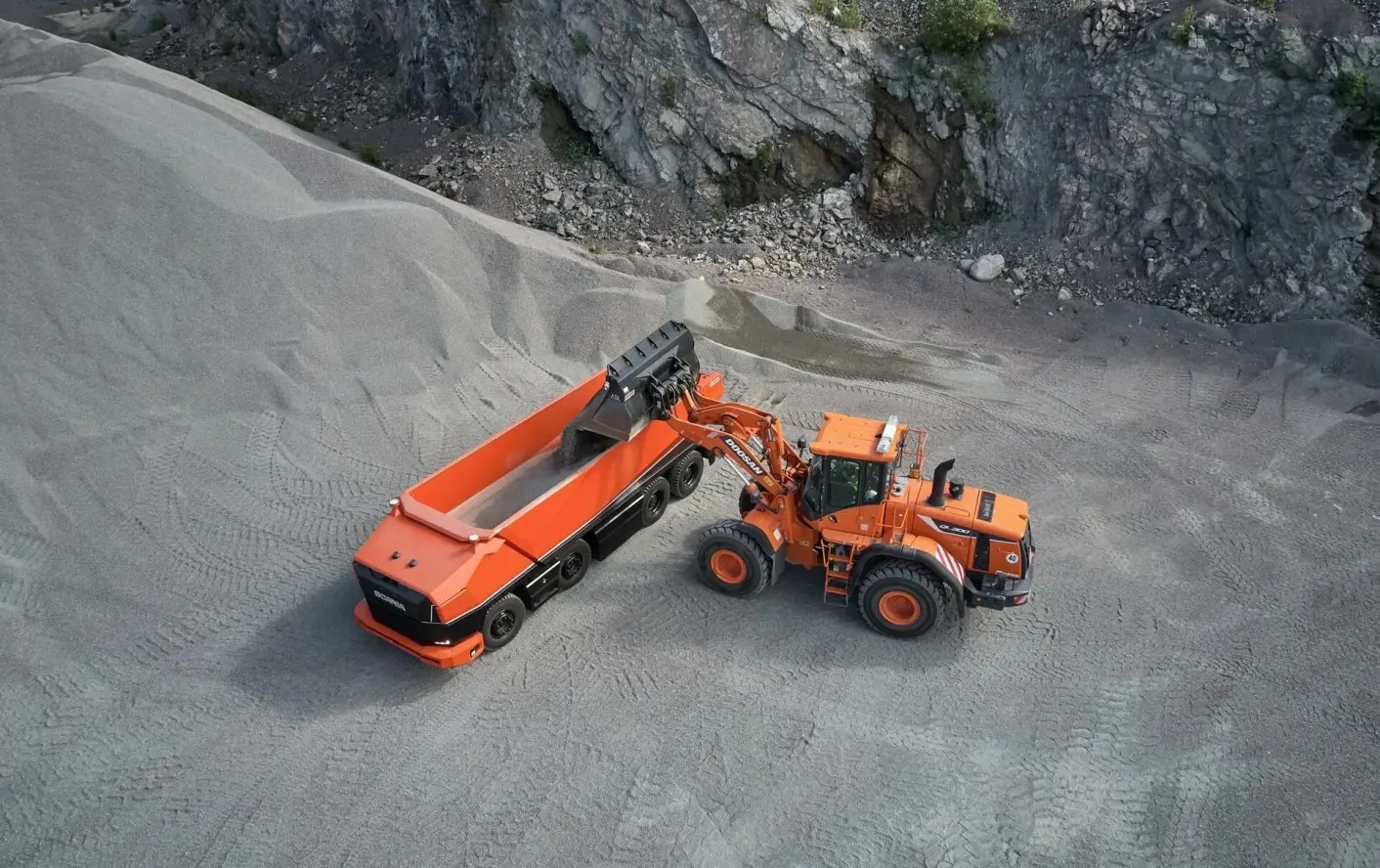
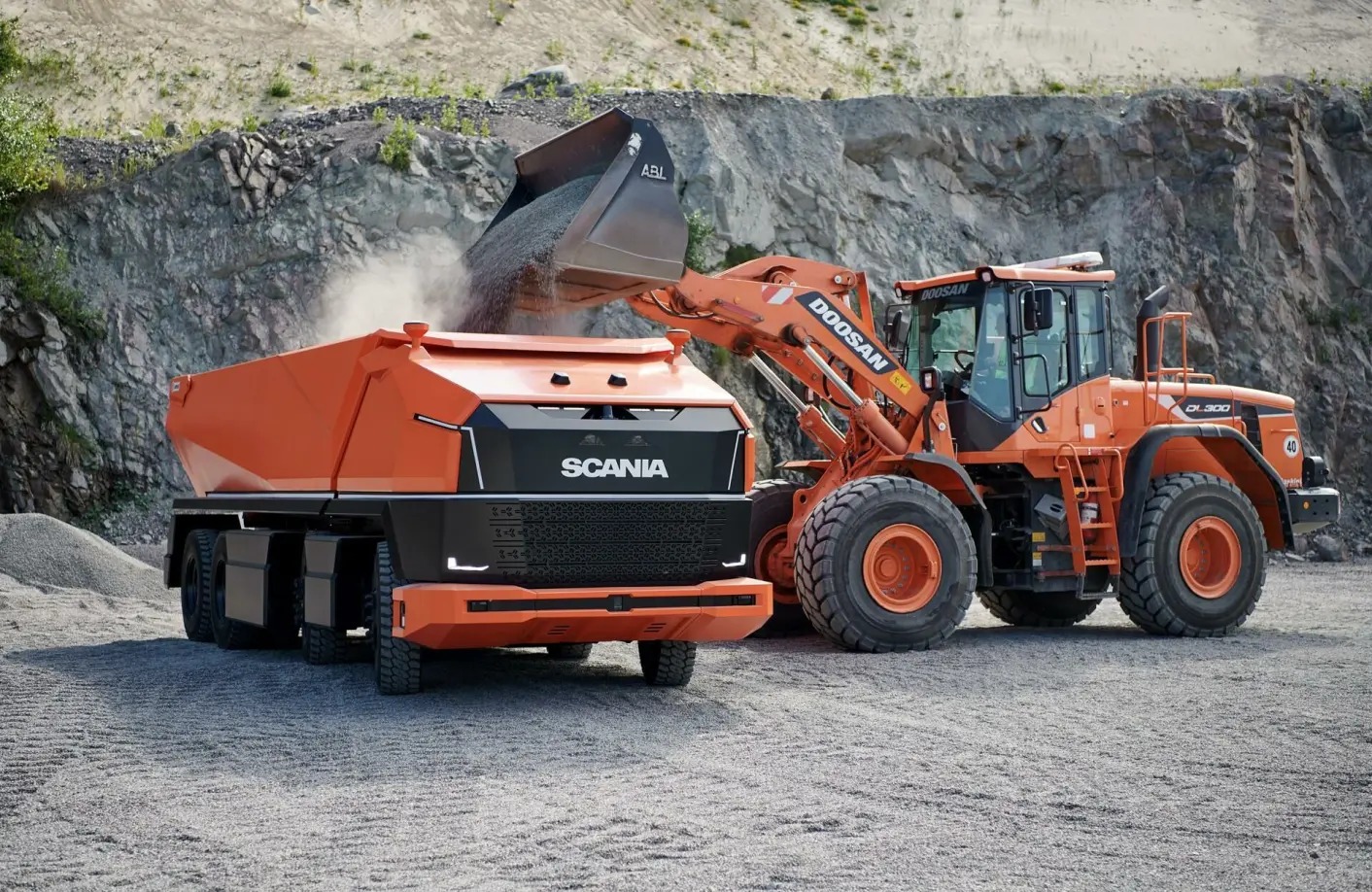
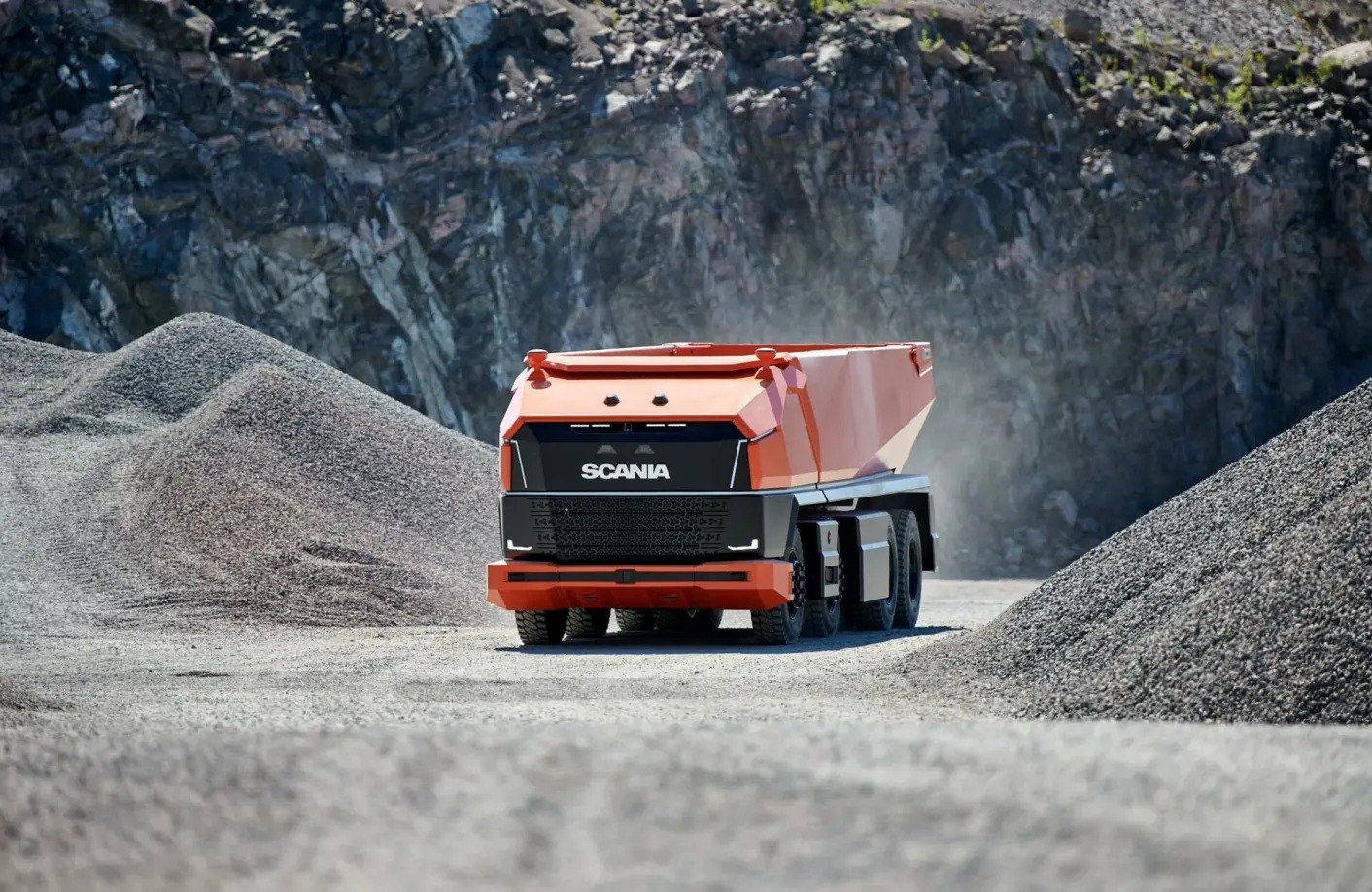
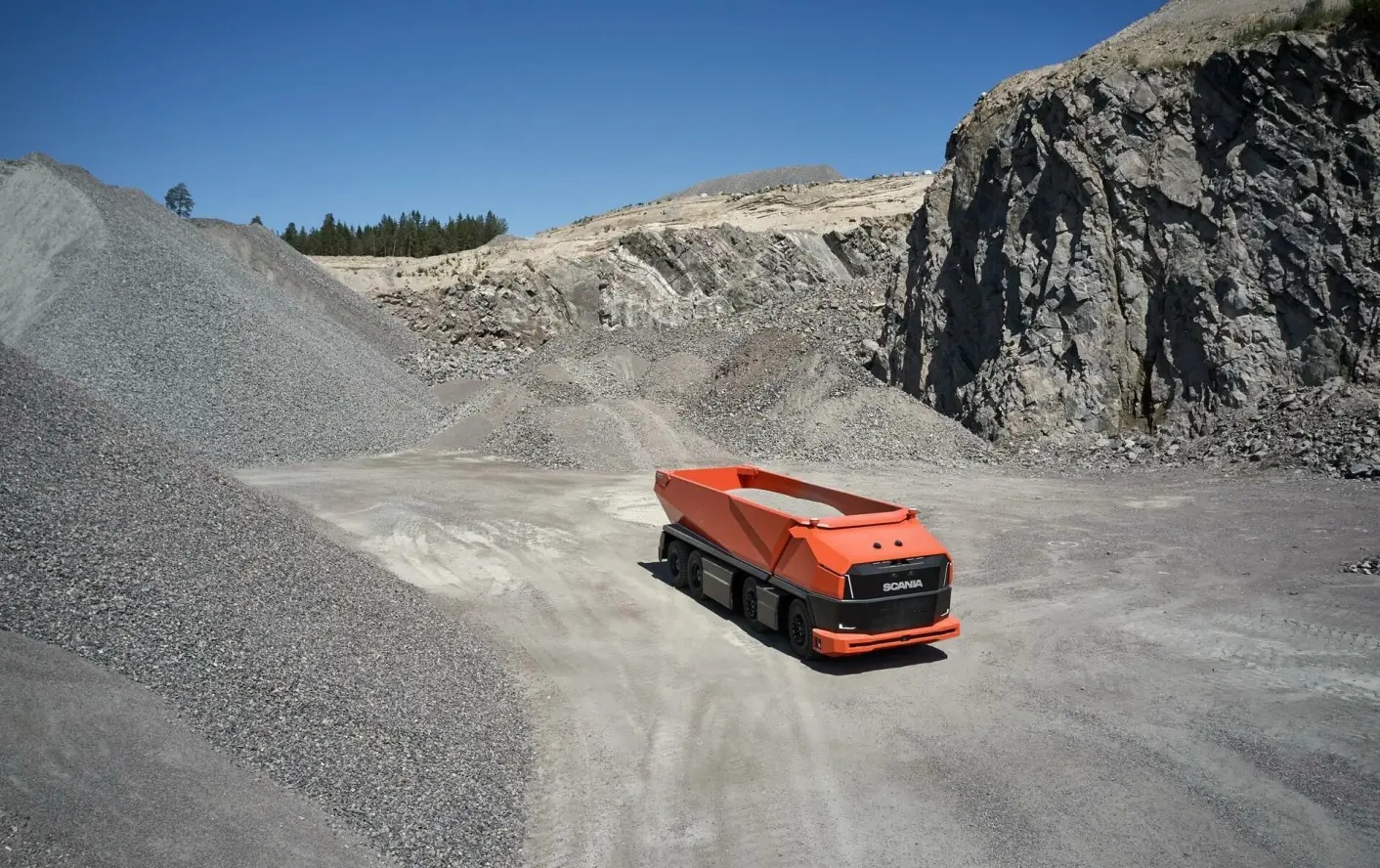
Scania presented the AXL on 24 September 2019 as its first fully autonomous heavy-truck concept and, unusually, removed the cab altogether. The company did not treat it as a conventional self-driving truck with a safety driver on board; instead, the AXL was conceived as a driverless haulage vehicle for mines and large, closed construction sites, where routes, traffic and operating conditions are relatively predictable.
The project was developed by a multidisciplinary Scania team and was intended to answer a difficult engineering question: what happens when there is no steering wheel and no person in the cab who can intervene if the autonomous system fails. Scania’s head of research and development, Claes Erixon, said that removing the cab changed the project fundamentally, because earlier autonomous trucks still retained a place for a safety driver.
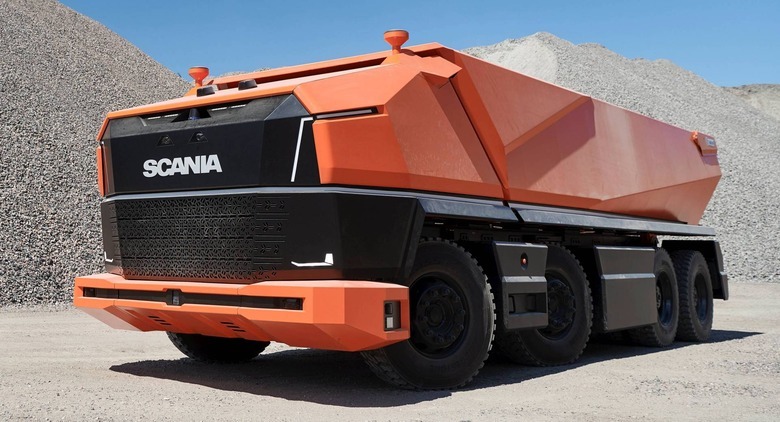
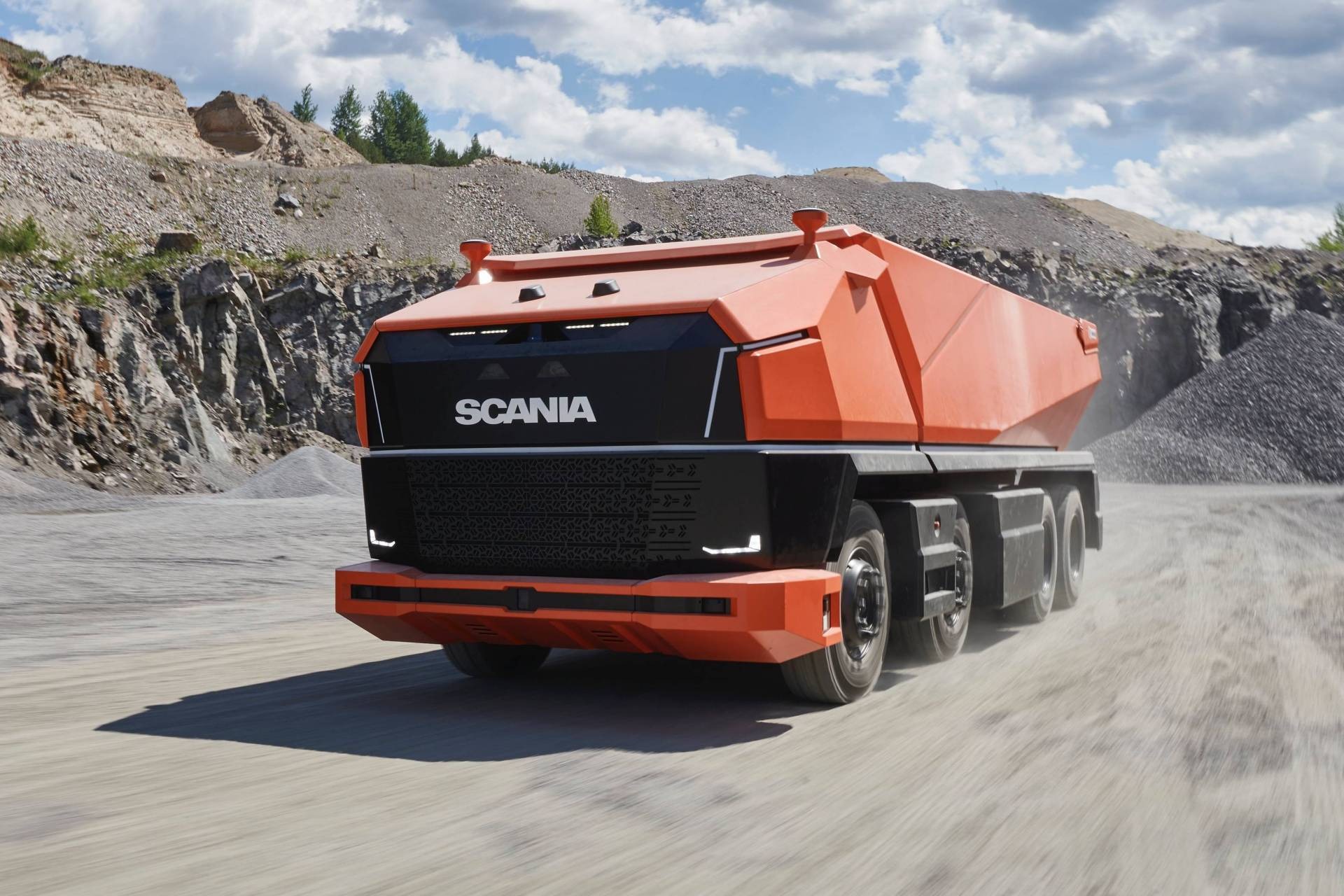
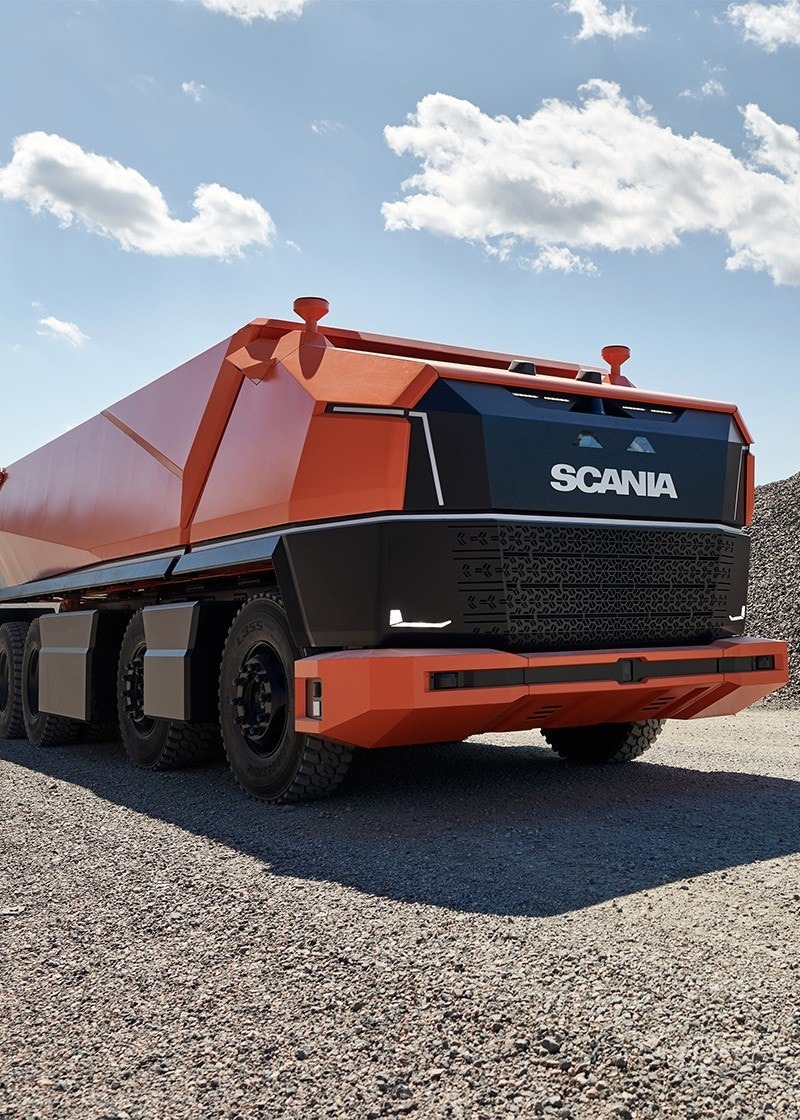
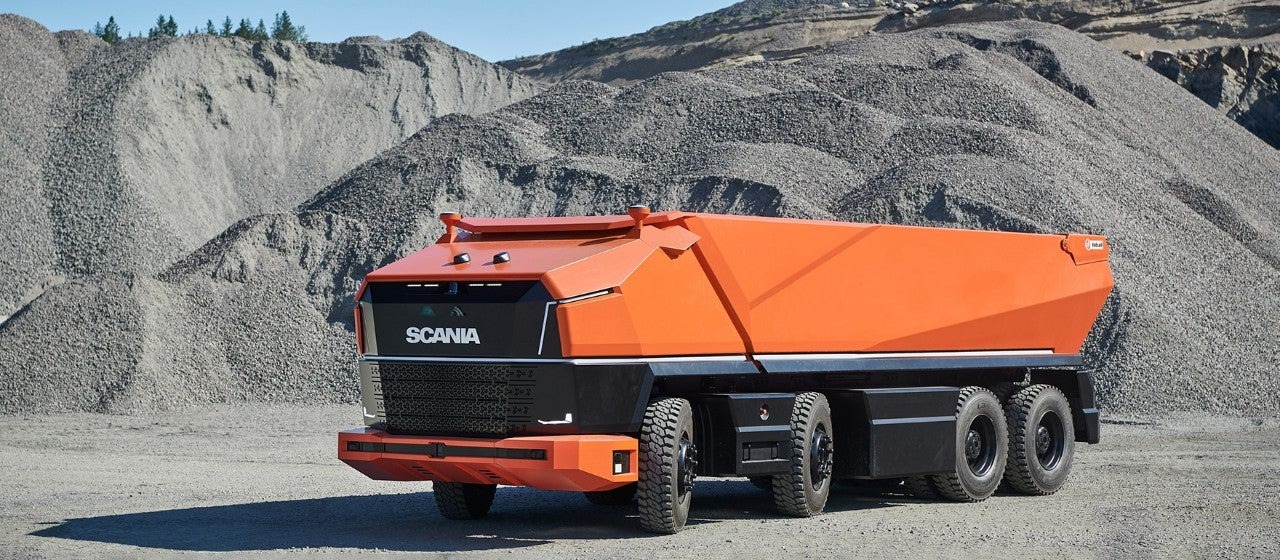
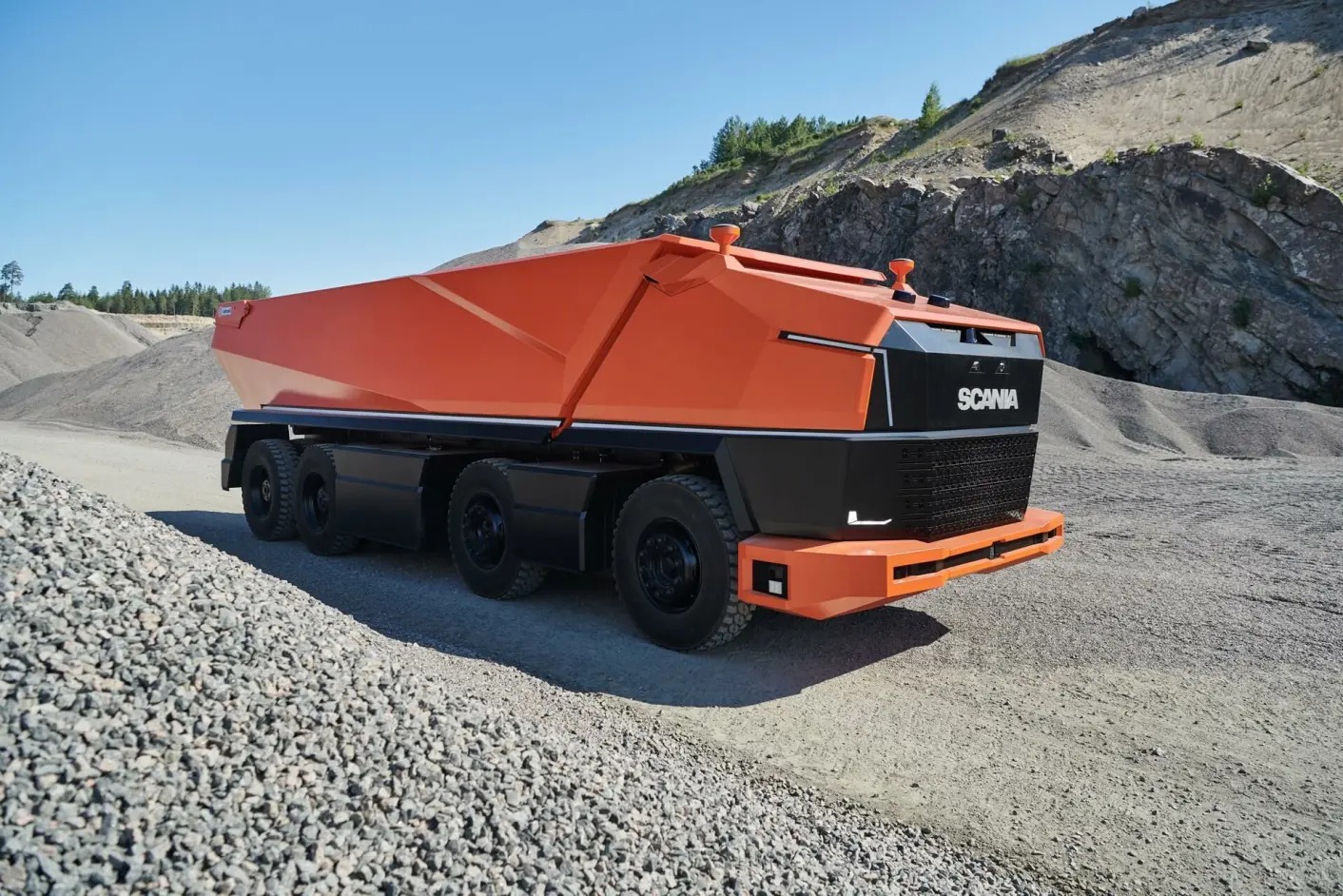
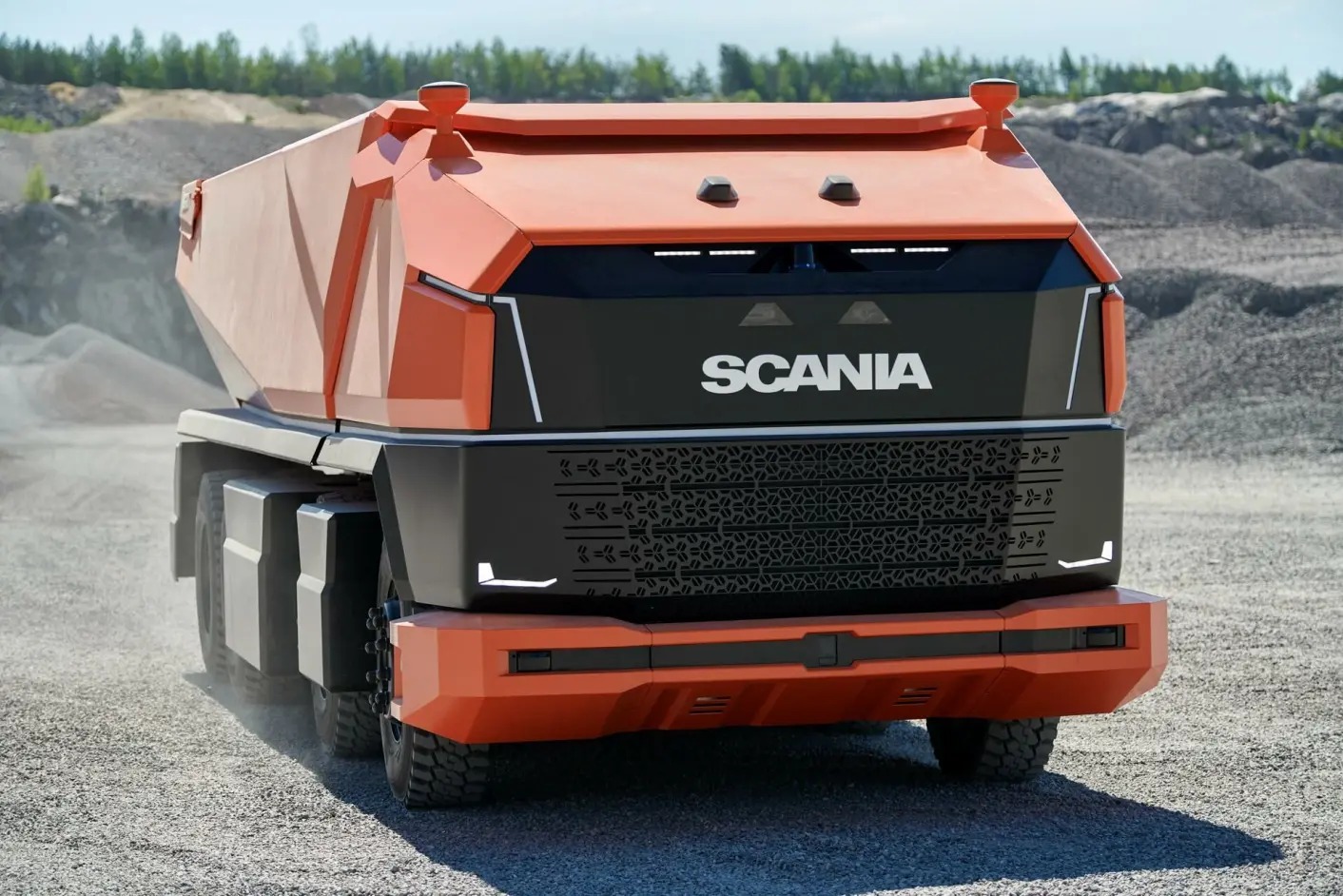
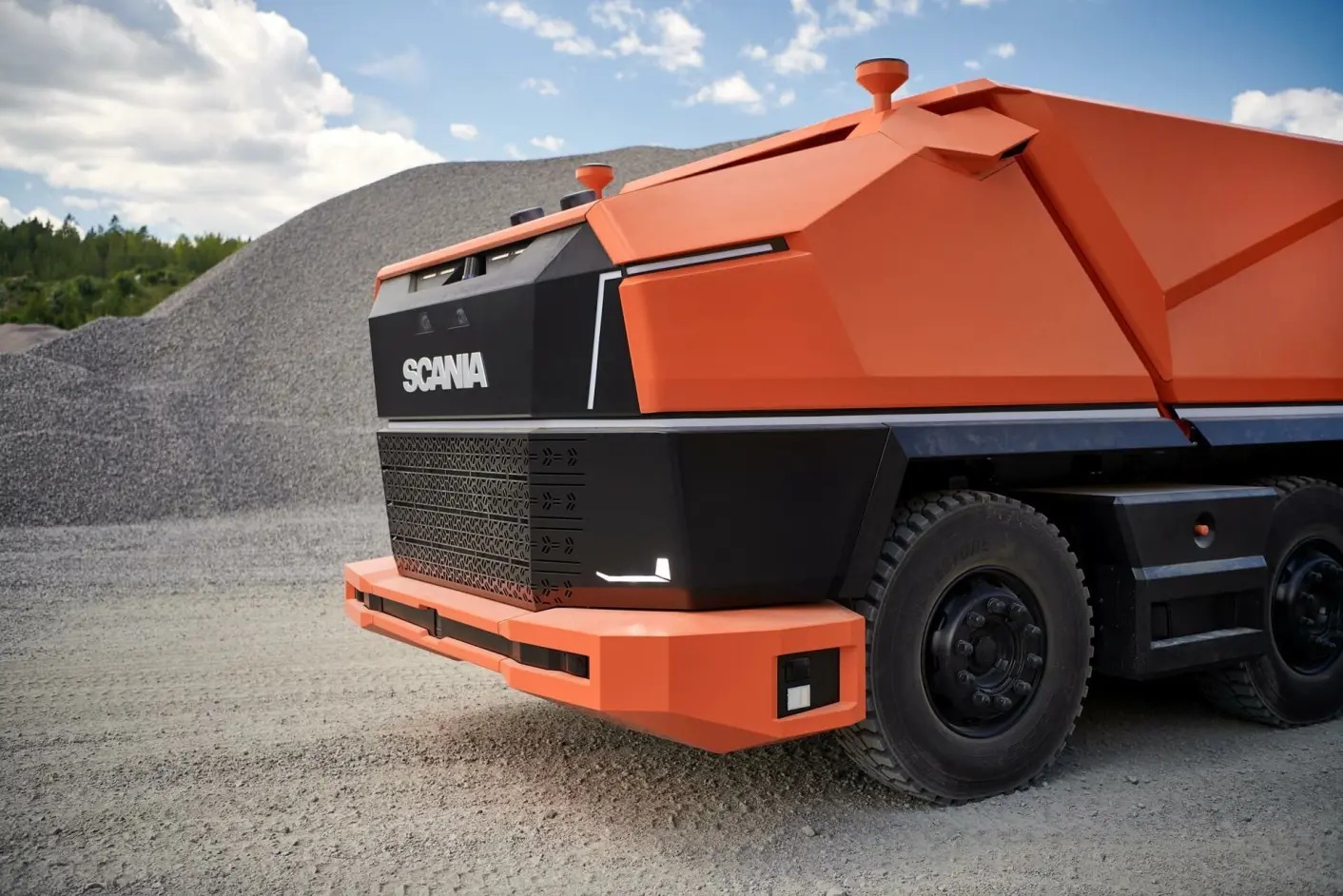
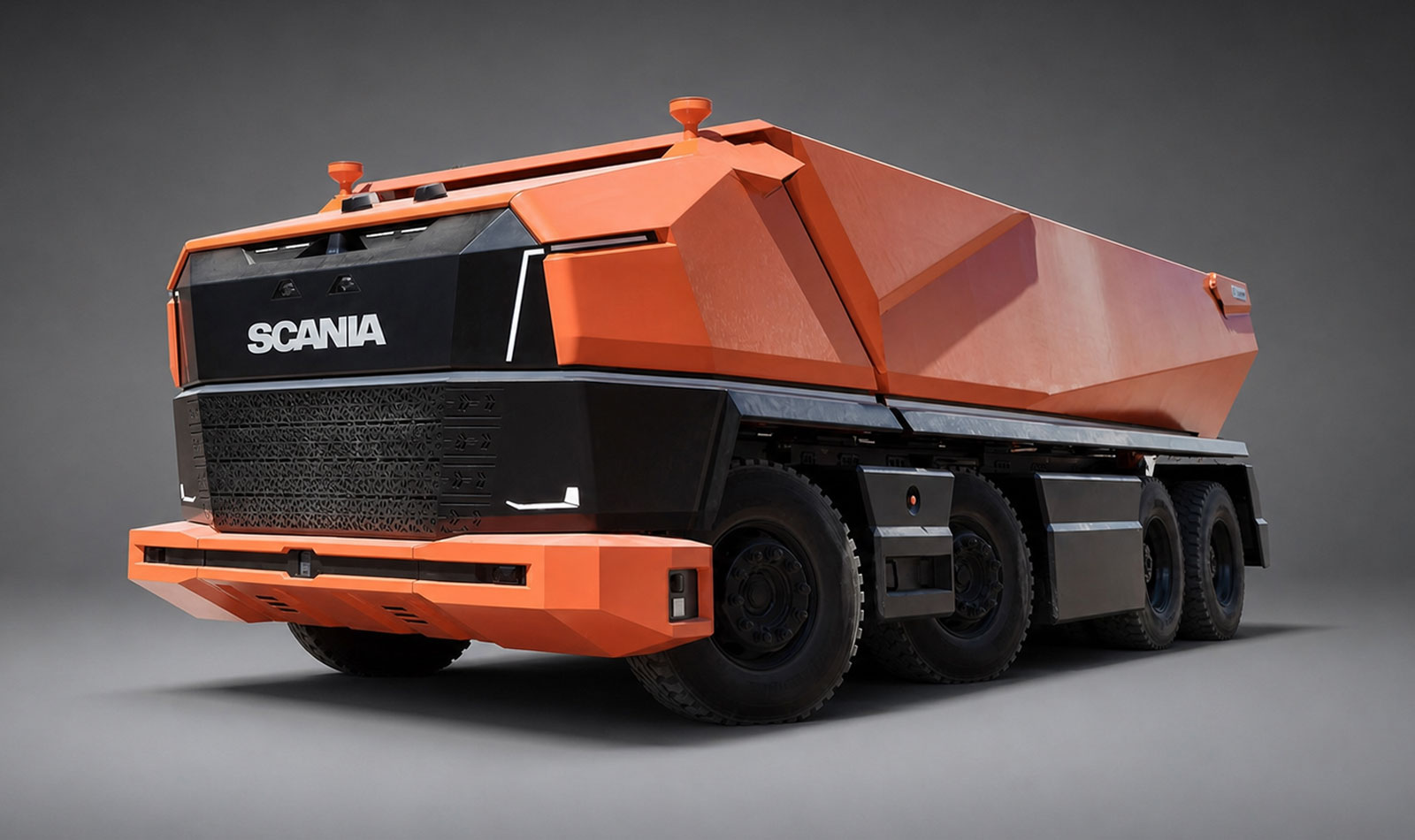
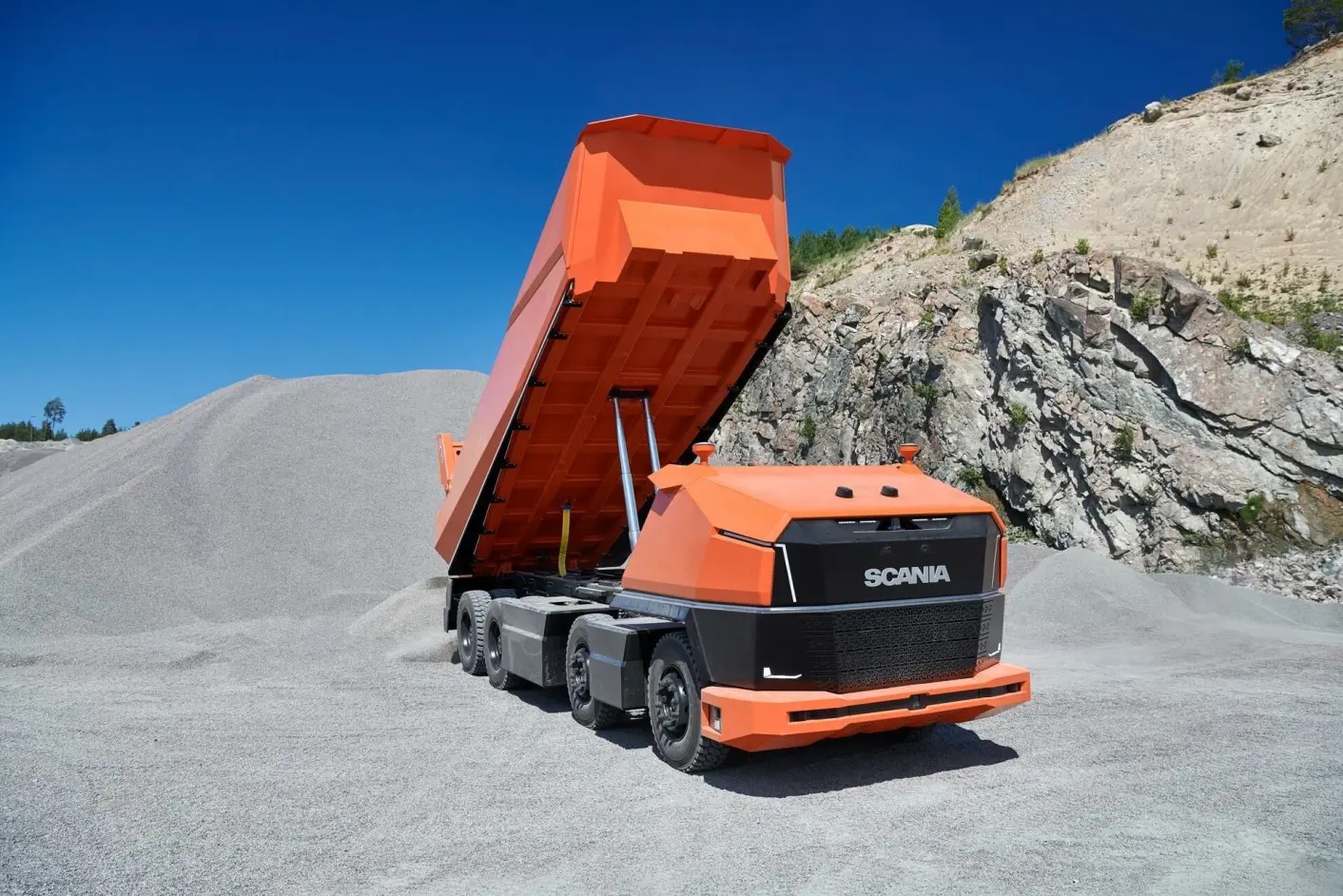
The AXL’s most distinctive feature was its Intelligent Front Module, which replaced the traditional cab. It housed the vehicle’s control electronics and combined data from cameras, radar, lidar sensors and GPS to create a shared view of the truck’s surroundings. The system was designed to steer, monitor and control the vehicle without human input, while a mine’s digital logistics system assigned it tasks and managed its movements.
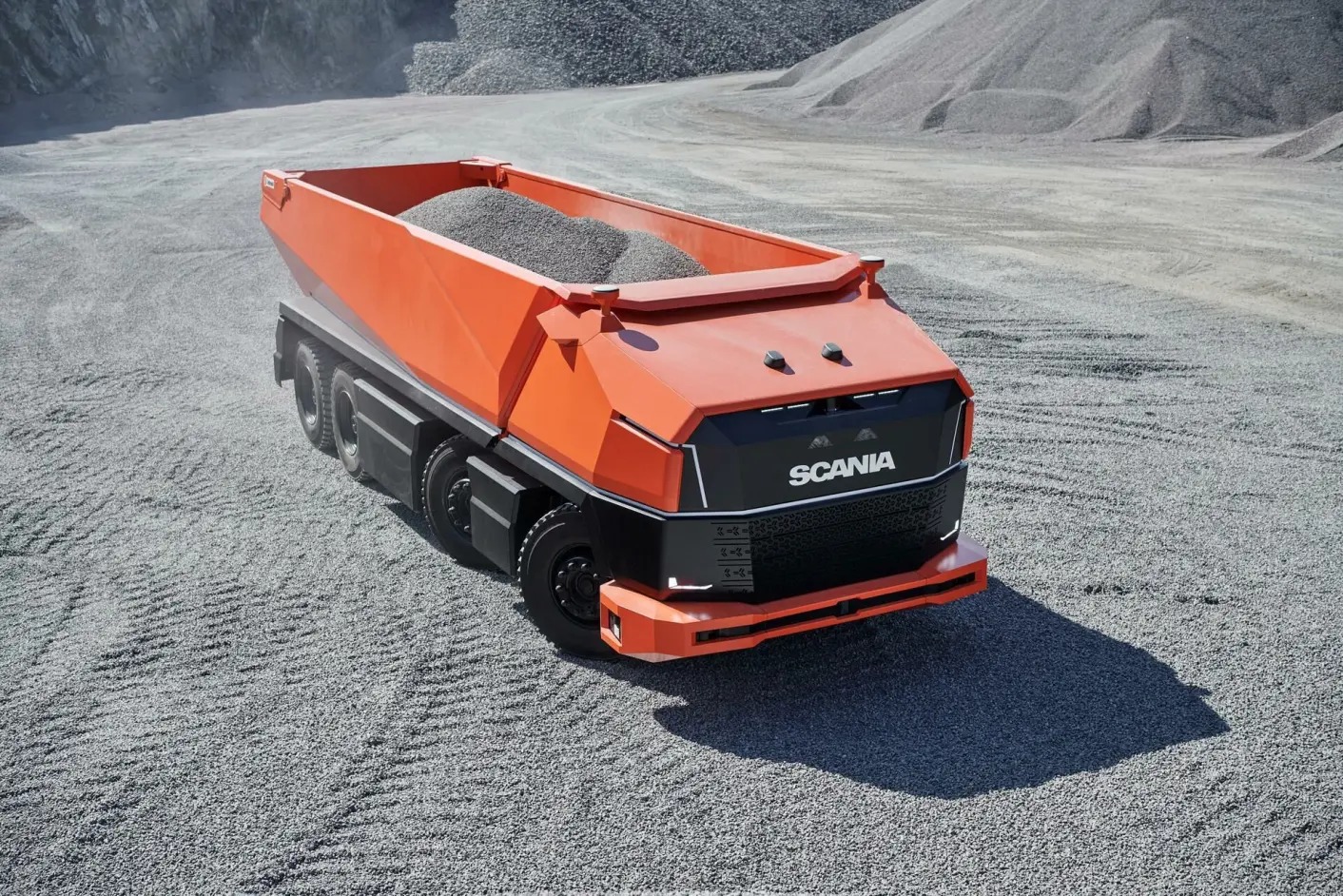
Safety was therefore central to the concept. Scania engineers said that the absence of a steering wheel meant the software had to work reliably in every foreseeable situation, since a driver could not simply take over in an emergency. The vehicle therefore incorporated redundancy, including a safe mode for its electronic braking system, and was intended only for cordoned-off industrial areas rather than public roads.
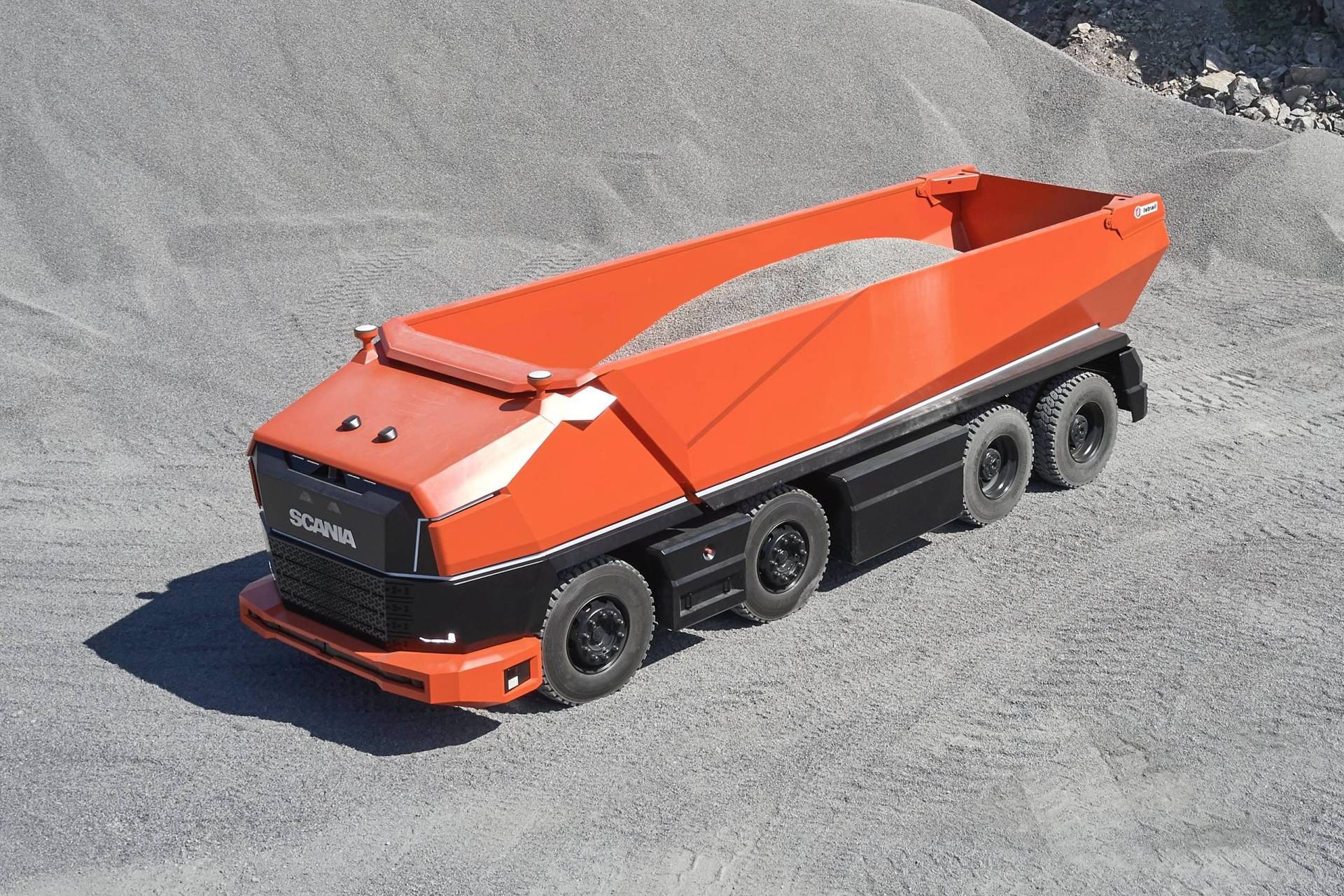
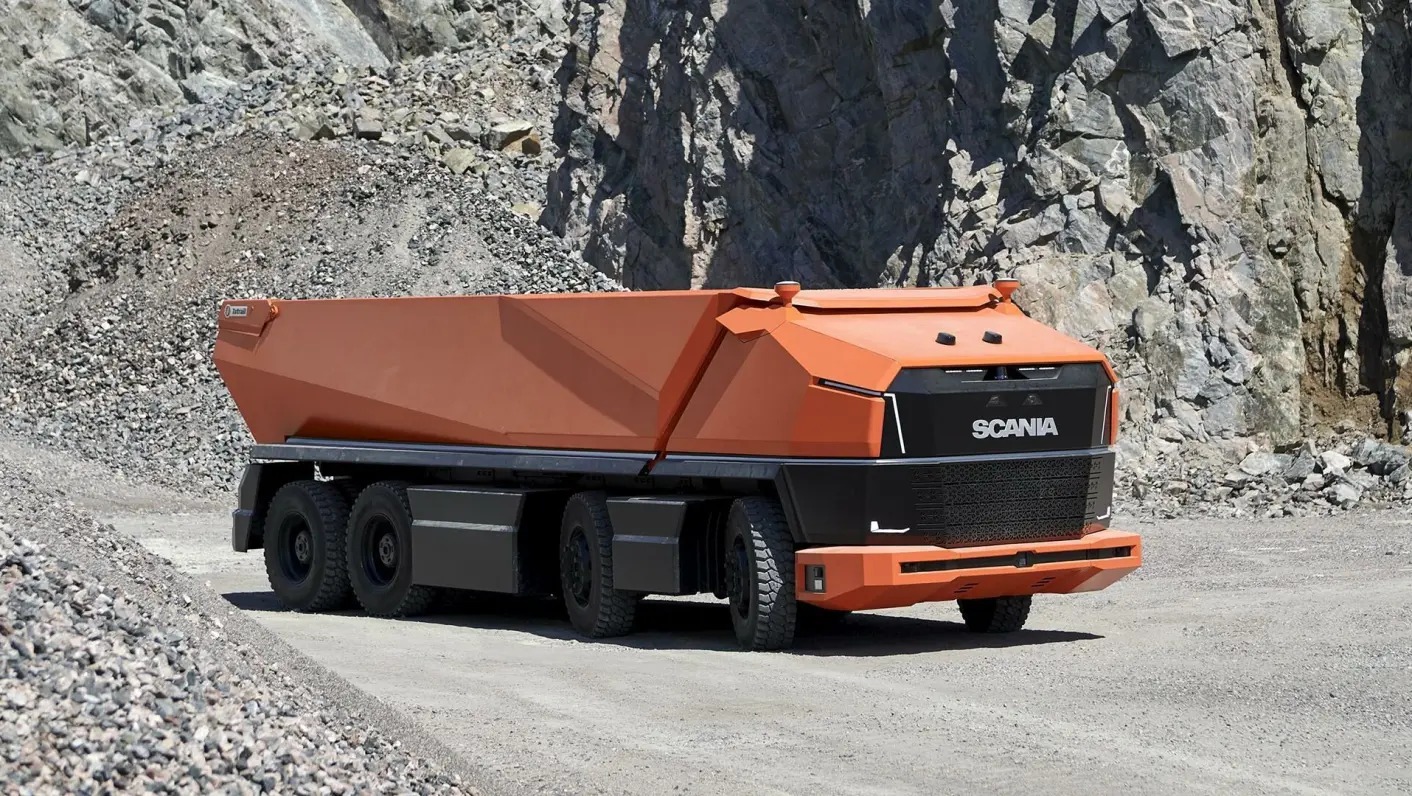
Although it looked radically futuristic, the AXL was not electric. It used an internal-combustion engine capable of running on renewable biofuel, specifically hydrotreated vegetable oil, or HVO. The demonstration vehicle was based on an 8×4 Scania donor truck with a 410 hp G410B8x4NA engine and could carry up to 40 tonnes using existing heavy-duty components.
The concept was built around Scania’s modular vehicle system, which meant that different engines, drivelines and wheel configurations could in principle be combined. Scania therefore saw AXL less as a single fixed product and more as a testbed for how autonomy could be integrated into its existing heavy-truck architecture.
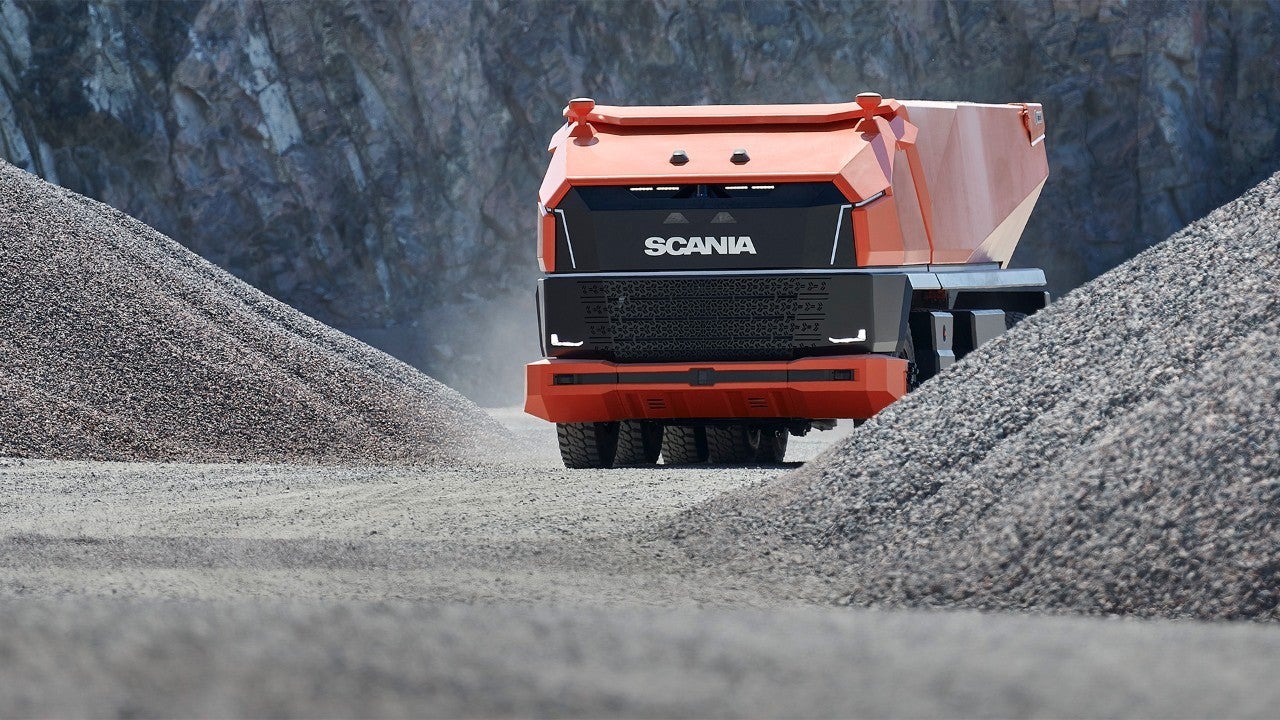
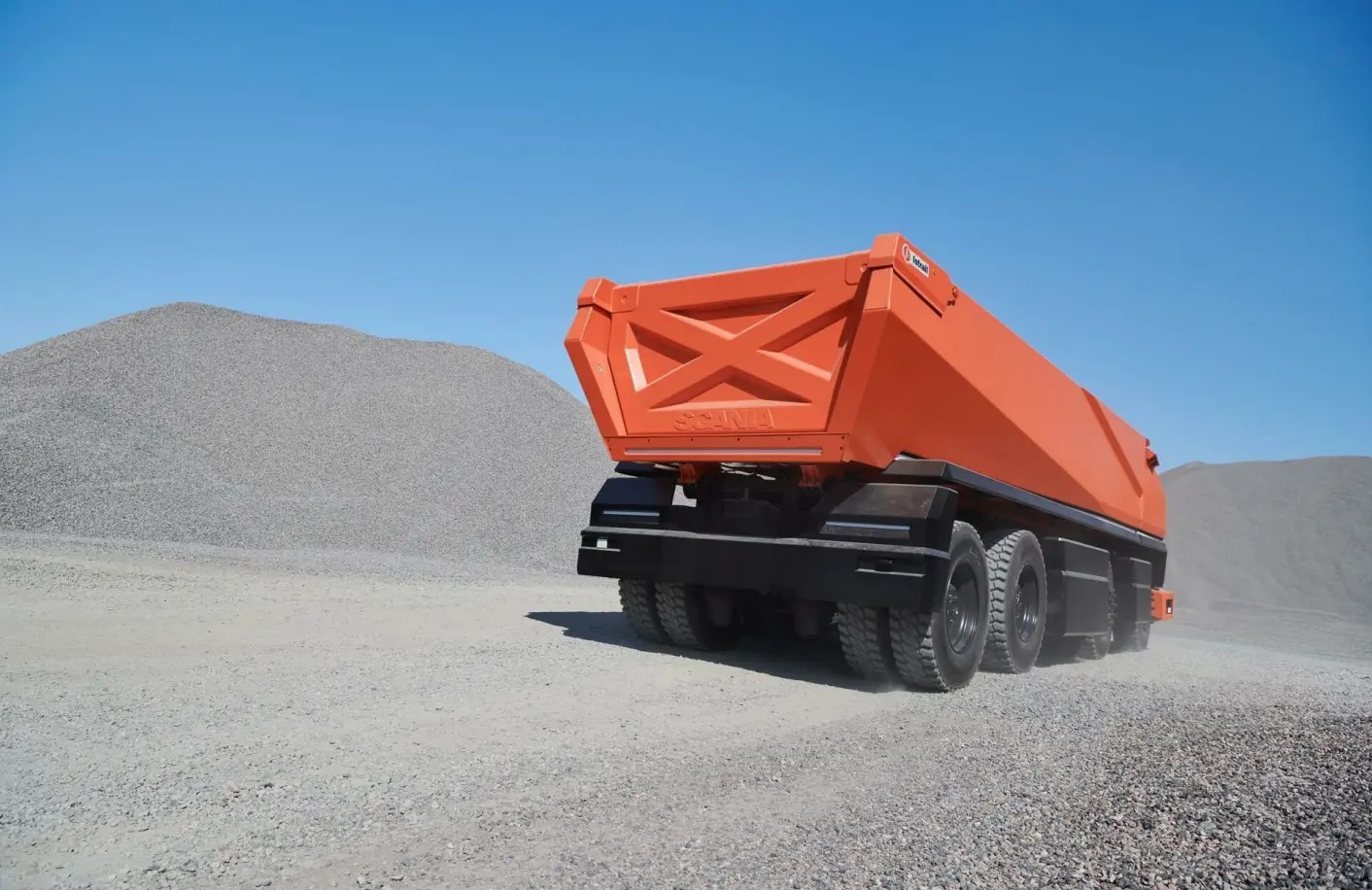
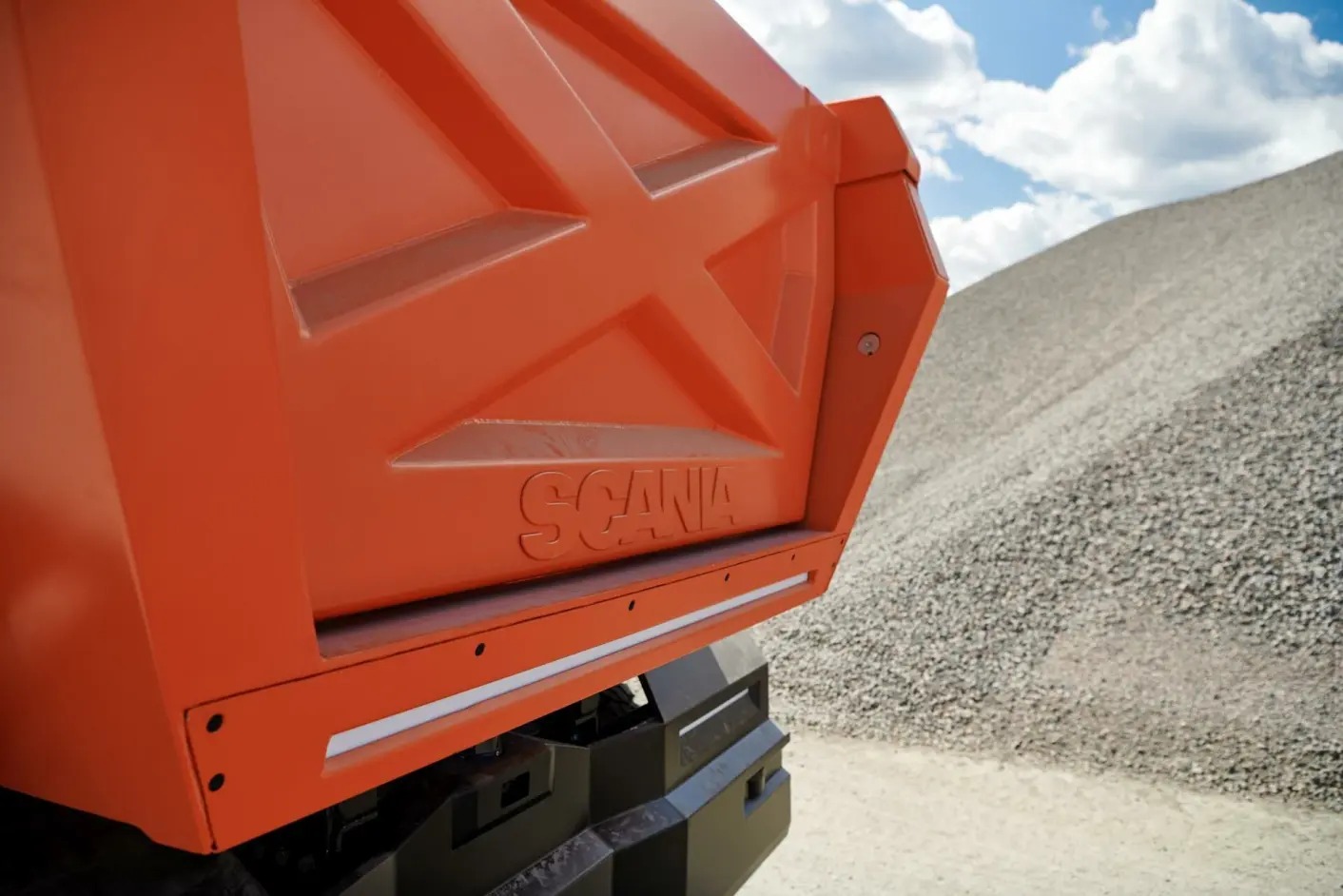
Visually, the AXL retained a recognisably Scania character despite having no windscreen, grille or conventional cab. Its designers wanted the vehicle to communicate strength and robustness, matching the harsh conditions of mining and construction work. The front module was integrated with the tipper body rather than treated as a separate cab-and-chassis arrangement, while the company retained visual references to its usual design language, including the colour scheme and the “wrapping T” motif formed by the grille and windscreen on ordinary Scania trucks.
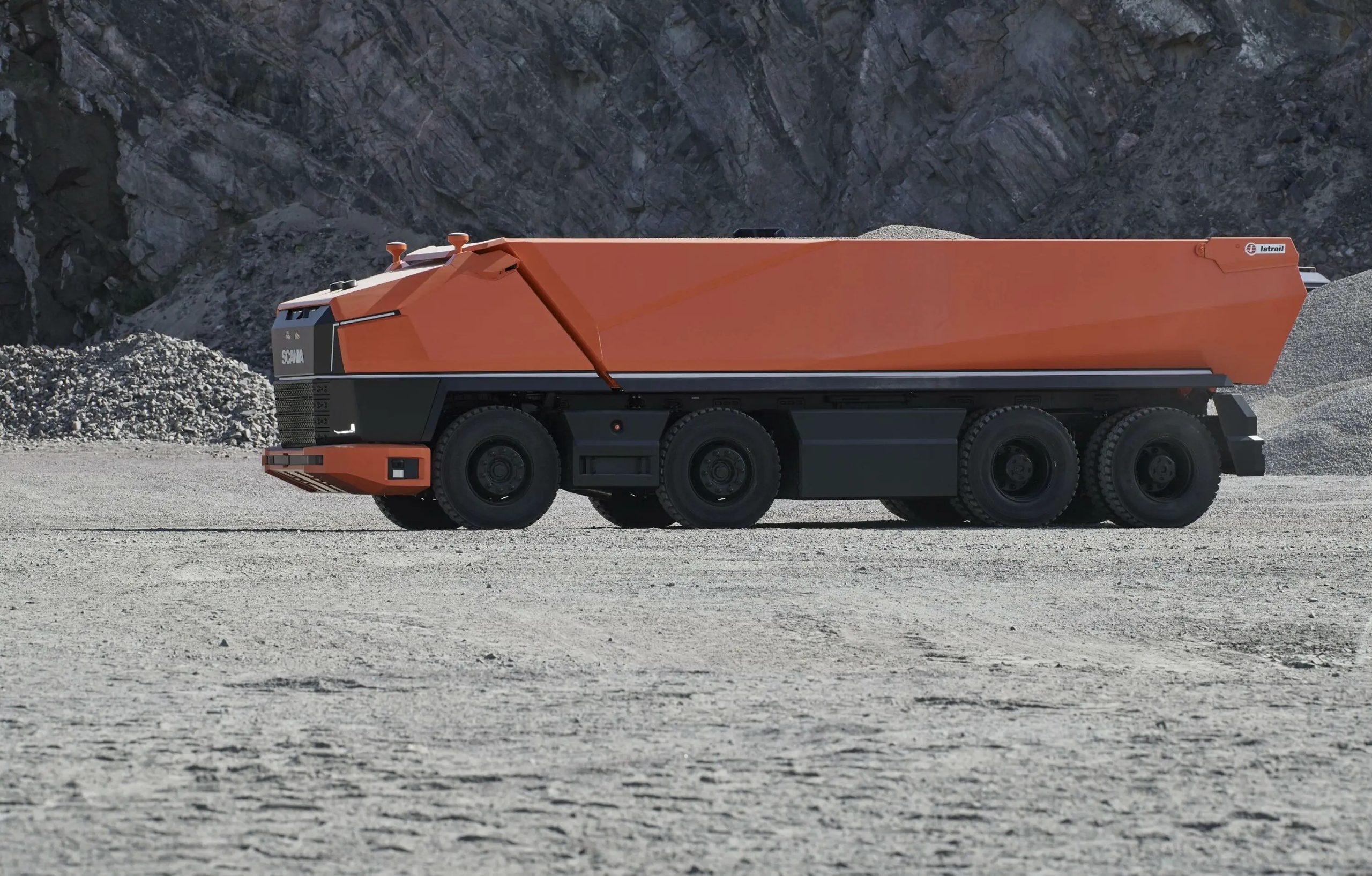
The first public demonstration took place on 2 October 2019 at the TRATON Group Innovation Day at Scania’s demonstration centre in Södertälje, Sweden. The AXL was presented as a working prototype, but not as a vehicle close to production.
Scania was clear that the AXL was a concept and a learning platform rather than a commercial programme. The company said it would continue to build and test concepts to demonstrate what was possible with the technology available at the time, but it did not announce a production version, a launch date or a customer programme based directly on AXL.
There is no reliable public evidence that the AXL prototype was put into series production, sold to a customer or publicly displayed as a permanent museum exhibit. Its sensors, radar units, lidar units, antennas and cameras were described as early prototypes rather than production components, and Scania’s later communications continued to describe AXL as a concept vehicle rather than a product.
The project’s practical legacy appears to have been its contribution to Scania’s broader autonomous-transport development. The company had already tested autonomous trucks in an Australian salt mine operated by Rio Tinto from 2018, but those vehicles retained a safety driver; AXL went further by removing the cab and exploring what a fully driverless Level 5-type vehicle could require.
In later years, Scania’s autonomous programme shifted from the AXL concept toward systems that could be commercialised in controlled industrial environments. The company continued to develop autonomous solutions for mines and ports, while also testing autonomous hub-to-hub logistics on European public roads with safety drivers on board.
By 2024, Scania had moved beyond the experimental stage in mining. It opened commercial orders for autonomous mining trucks, with initial customer deliveries planned from 2026, indicating that the knowledge and technologies explored through projects such as AXL were being carried forward into more practical, customer-oriented systems.
The AXL therefore remains best understood as a bold research and design experiment rather than a forgotten dead end. It did not become a production Scania, but it helped the company test the limits of fully driverless heavy-vehicle operation and contributed to the development path that later led to Scania’s autonomous mining solutions.