Russia:
1920 -
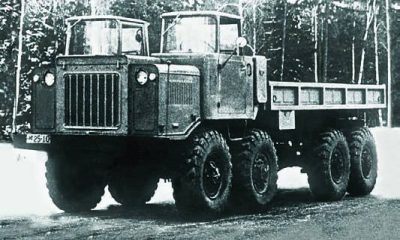
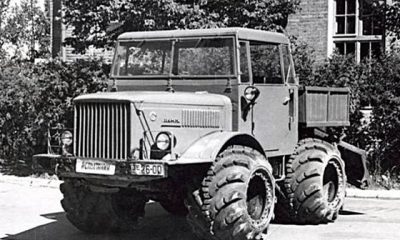
p.t.NAMI (the Central Scientific Research Automobile and Automotive Engine Institute, Moscow) is Russia's leading research organisation in the field of automotive engineering. It is not a serial vehicle manufacturer: its trucks, like its cars, were developed as prototypes, test vehicles and designs for the industry.
The institute traces its origin to the Scientific Automobile Laboratory (NAL), set up in 1918 under the Scientific and Technical Department of the Supreme Economic Council (VSNKh) and headed by Professor Nikolai Brilling. The Scientific Automotive Engine Institute itself was established on 14 March 1920. From 1931 to 1946 it was known as the Scientific Automotive and Tractor Institute (NATI), and in 1940 it was awarded the Order of the Red Banner of Labour.
In 1927 NAMI developed its first original vehicle, the NAMI-1, regarded as the first Soviet-designed car. In the 1930s the institute became the main development centre of the Soviet motor industry: it created tractors, truck designs, the first Soviet trolleybuses, and half-tracks and armoured vehicles for the Red Army. Vehicles under the NAMI name were built in series only in the 1920s and 1930s; since then they have been prototypes and concept vehicles.
NAMI worked with Soviet and Russian plants on the creation, testing and introduction into production of most domestic vehicles, from passenger cars to heavy trucks. A test centre for automobile and motorcycle equipment was opened in the 1960s. The institute received the status of a State Scientific Centre of the Russian Federation in 1994, and in 2003 it was certified as a testing centre for automotive products. In 2018 it presented the Aurus Senat limousine, and in May 2022 it took over Renault's controlling stake of about 68% in AvtoVAZ.
Read more