Hyundai
Commercial
Hyundai Pavise

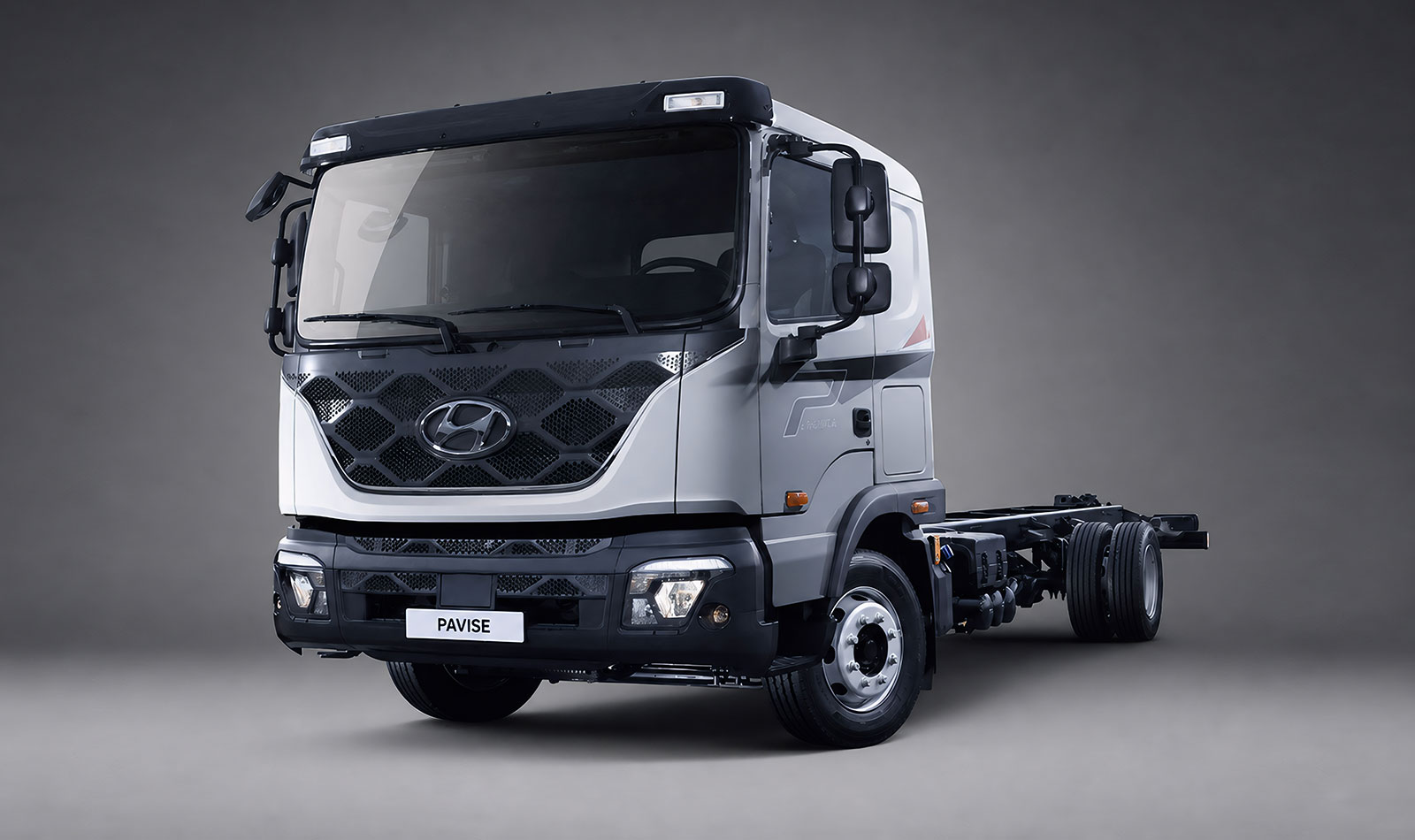
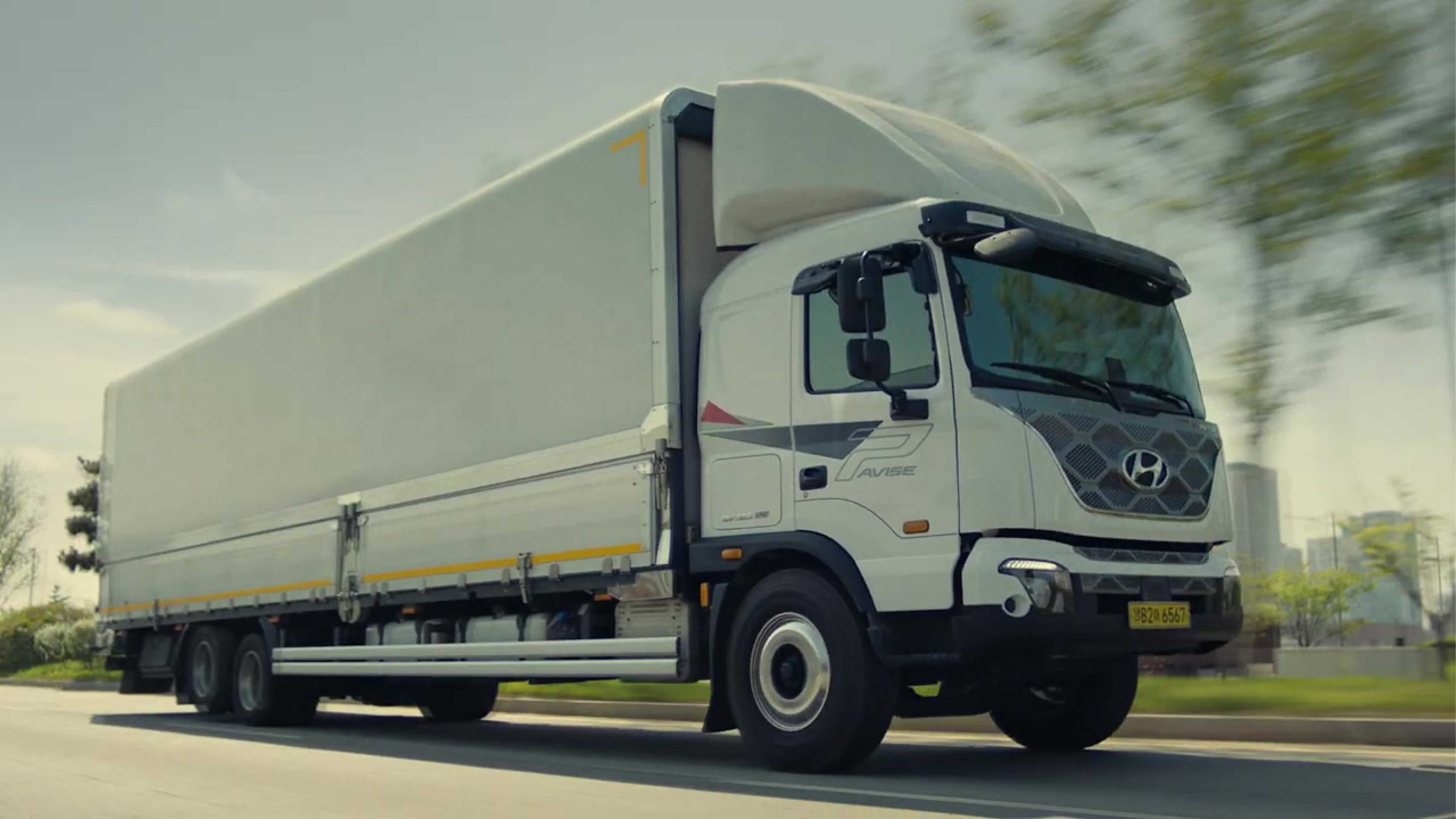
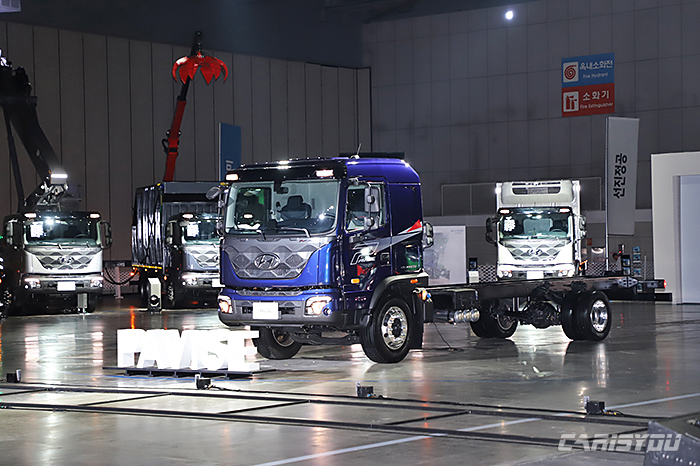
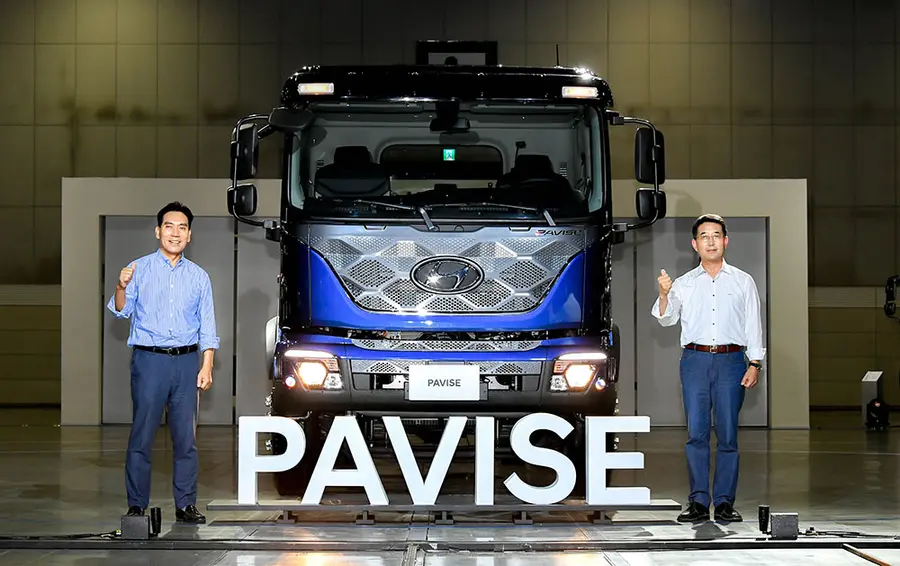
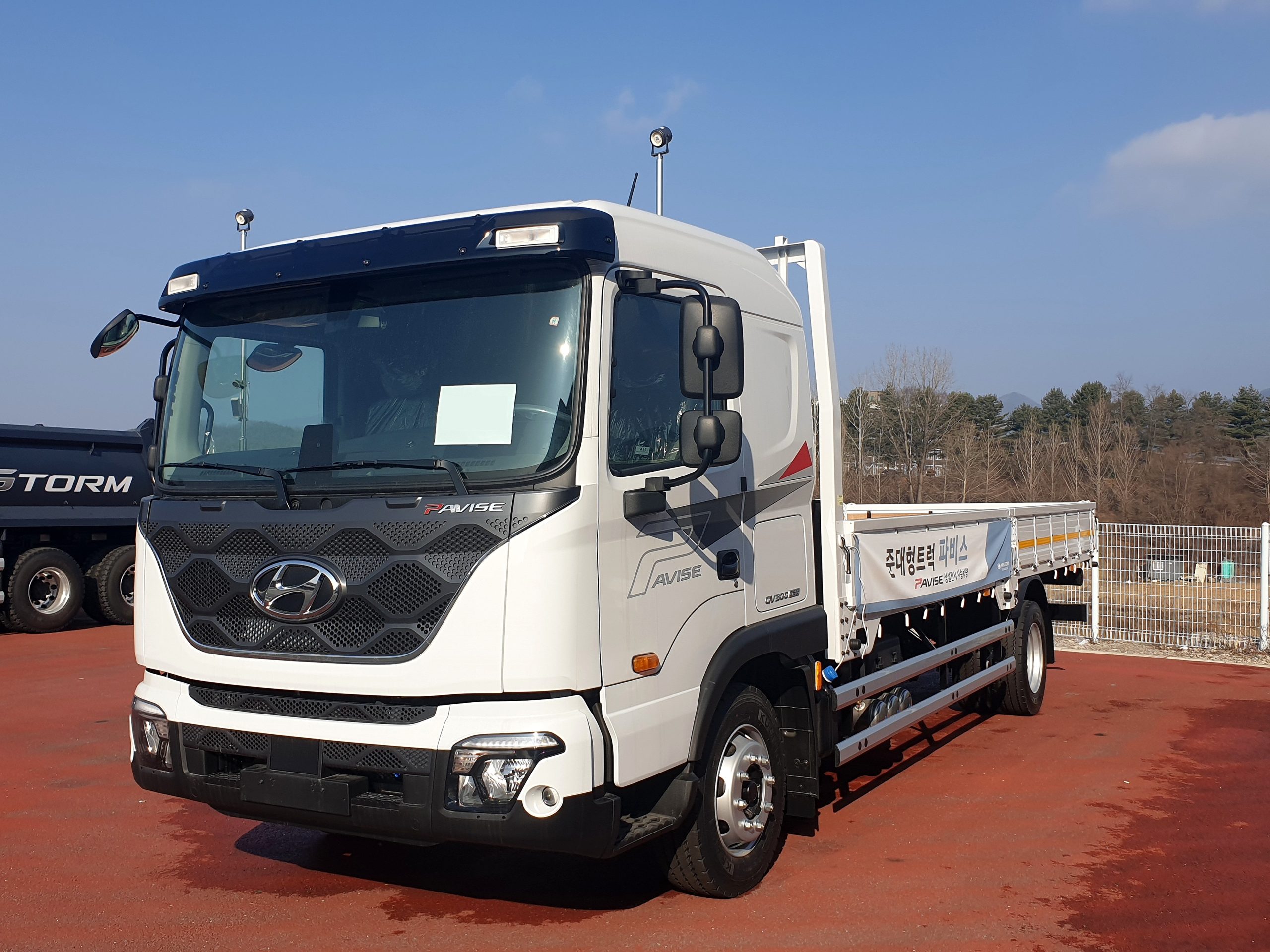
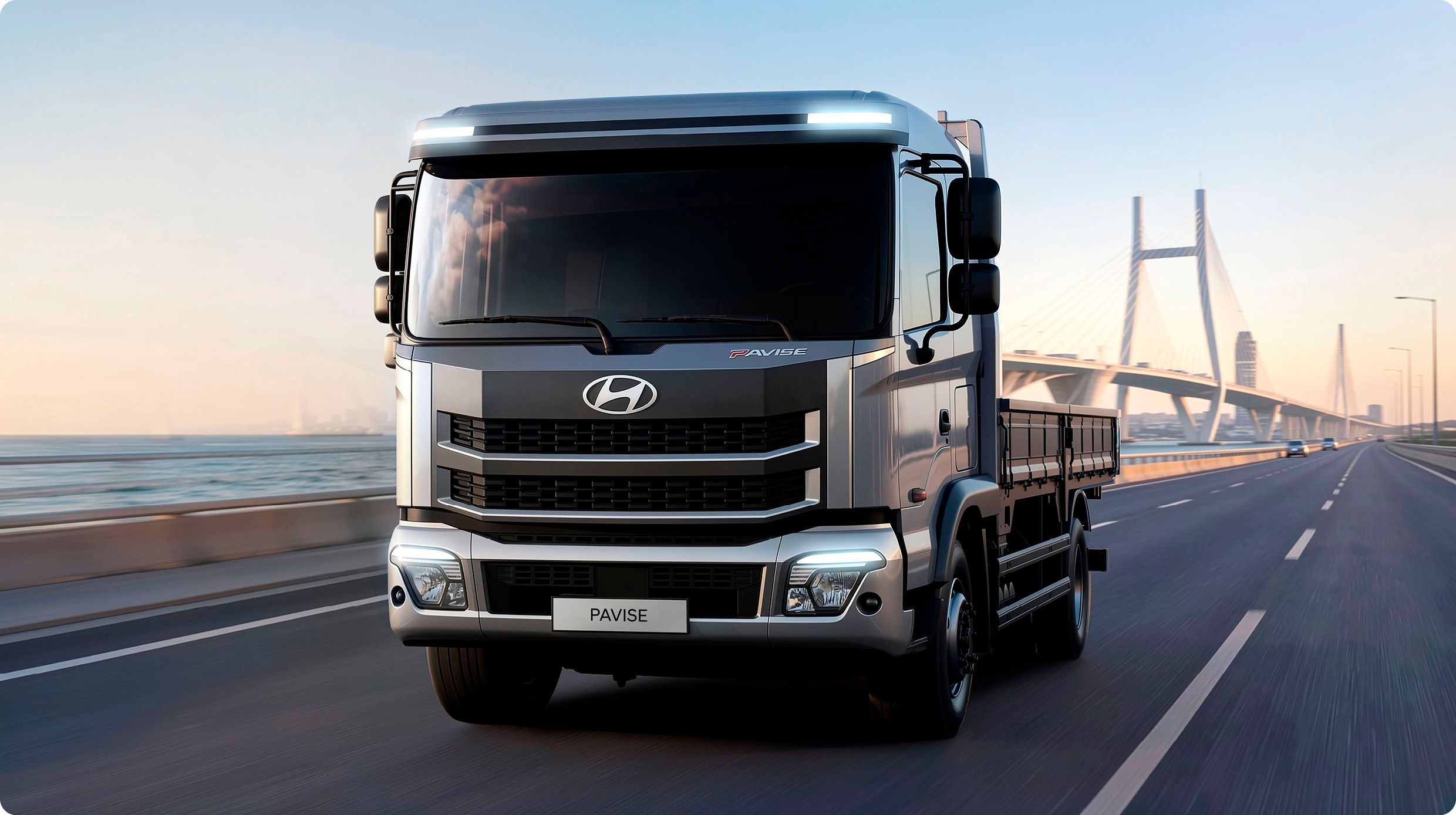
The Hyundai Pavise is a medium to semi-large truck from Hyundai Motor Company, unveiled on 29 August 2019 at the Hyundai Truck & Bus Business Fair at KINTEX in Ilsan, South Korea.
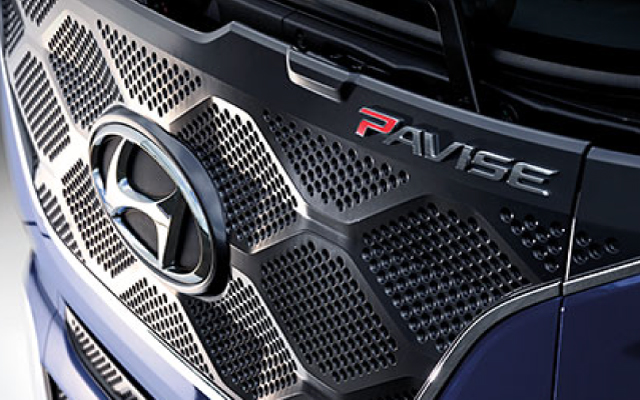
It is built at the Jeonju commercial vehicle plant in Wanju and was presented as a global model for Latin America, Asia-Pacific, the Middle East, Africa and China. The name is said to stand for Practical, Adaptable, Volume, Information, Safety and Economical, and it also refers to a large medieval shield, a motif that shows in the grille.
Hyundai released the first renders on 21 August 2019 under the project code QV. Pre-orders opened on 4 September 2019, with production from September and deliveries from October, though reports differ on the exact launch month. Lee In-cheol, head of Hyundai’s Commercial Vehicle Business Division, called the Pavise “a new class of truck born from the best of medium and heavy trucks”.
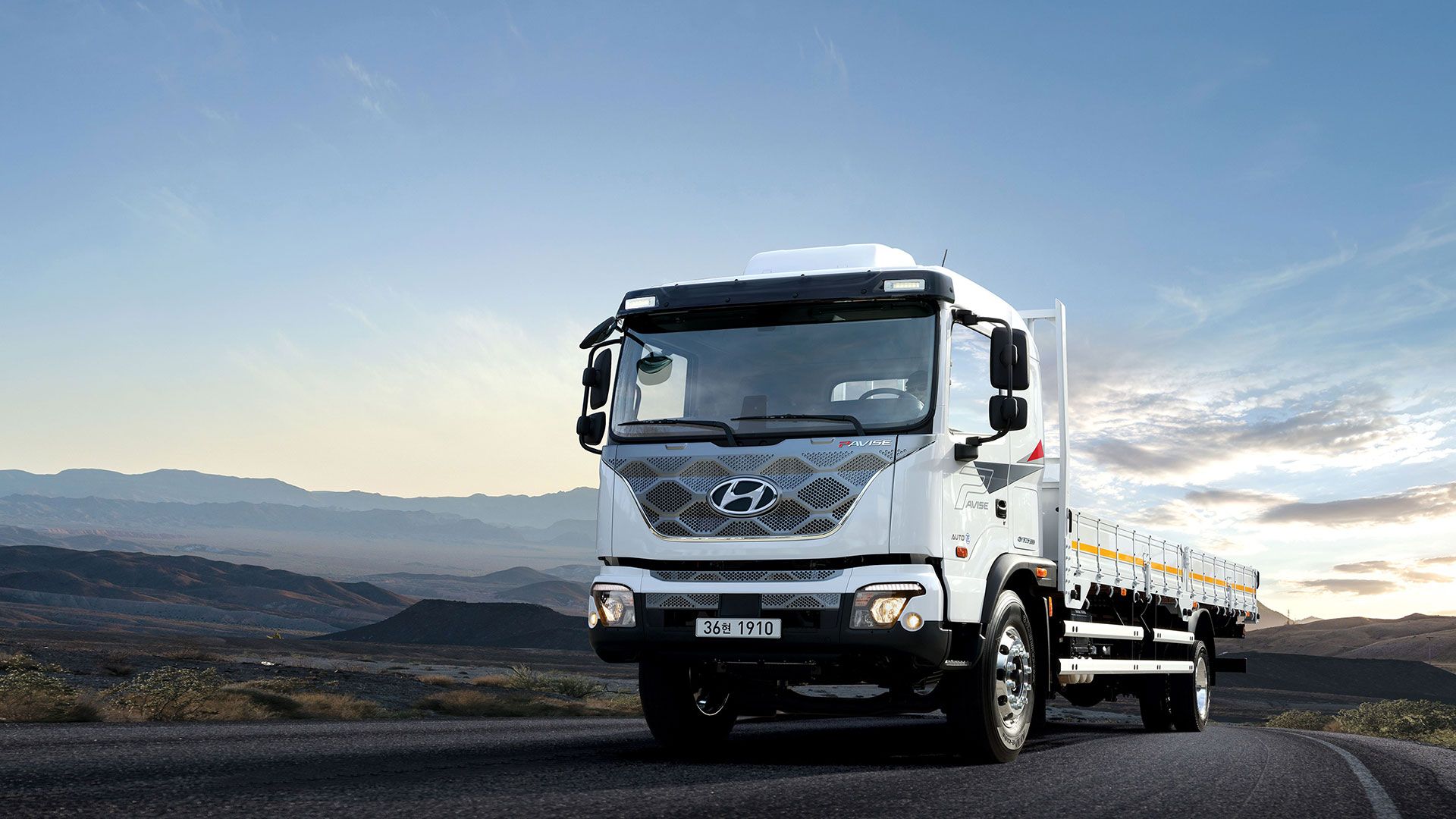
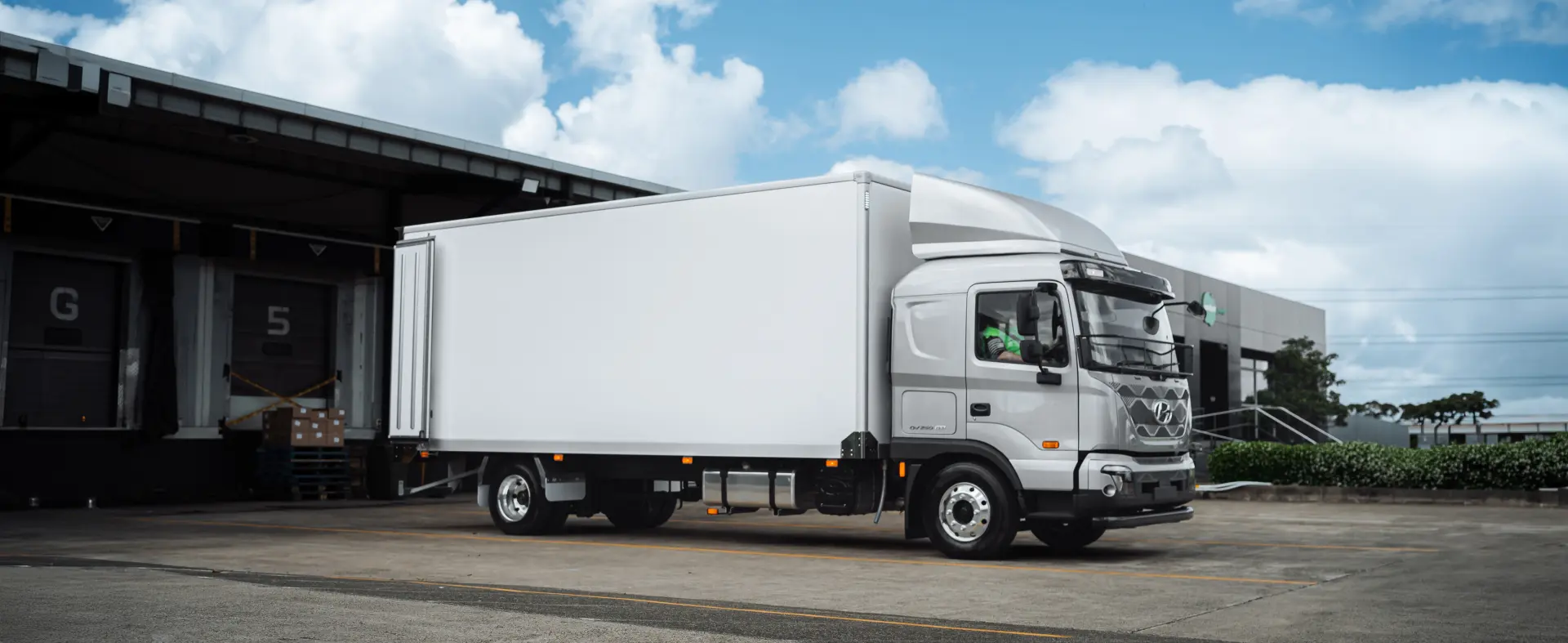
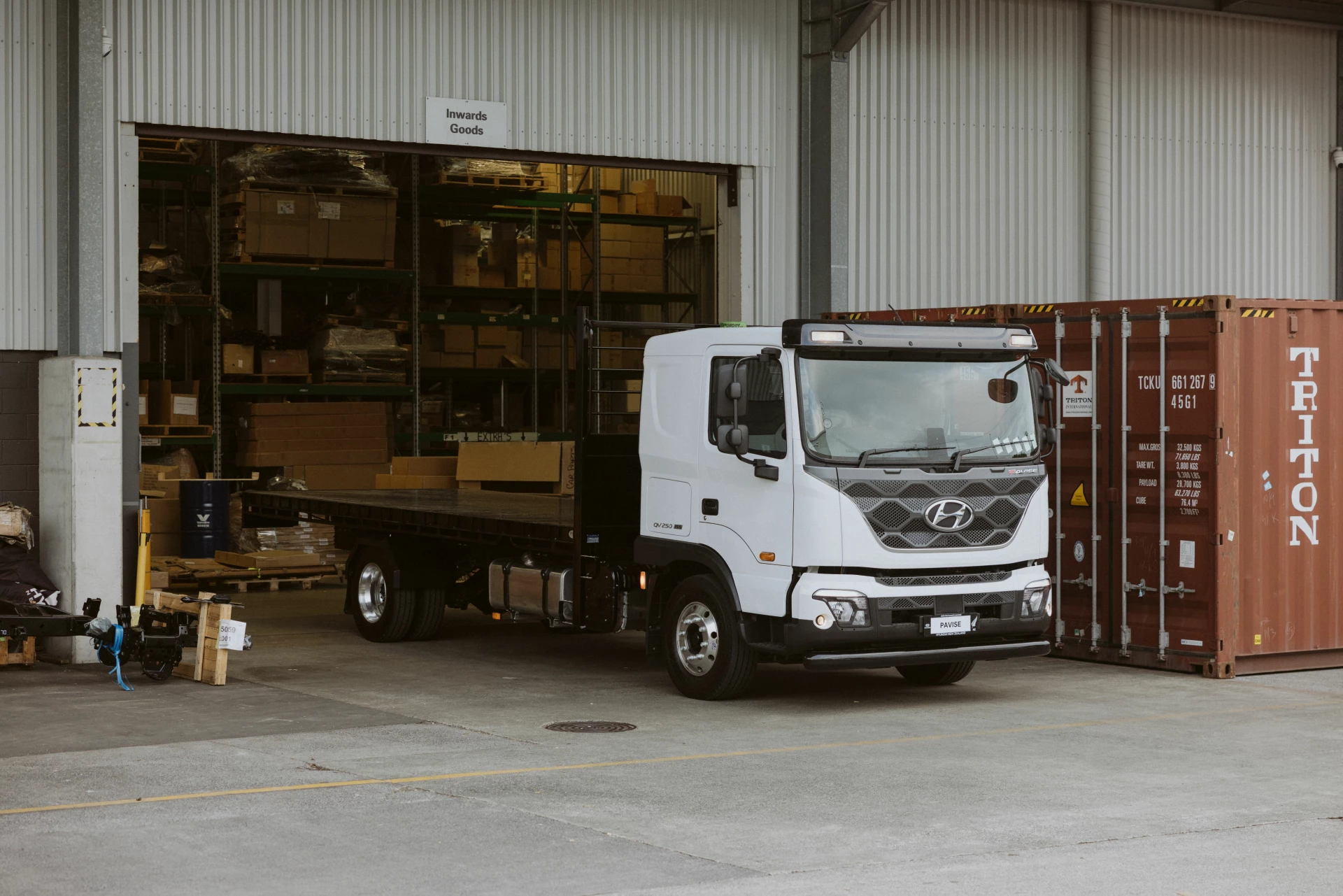
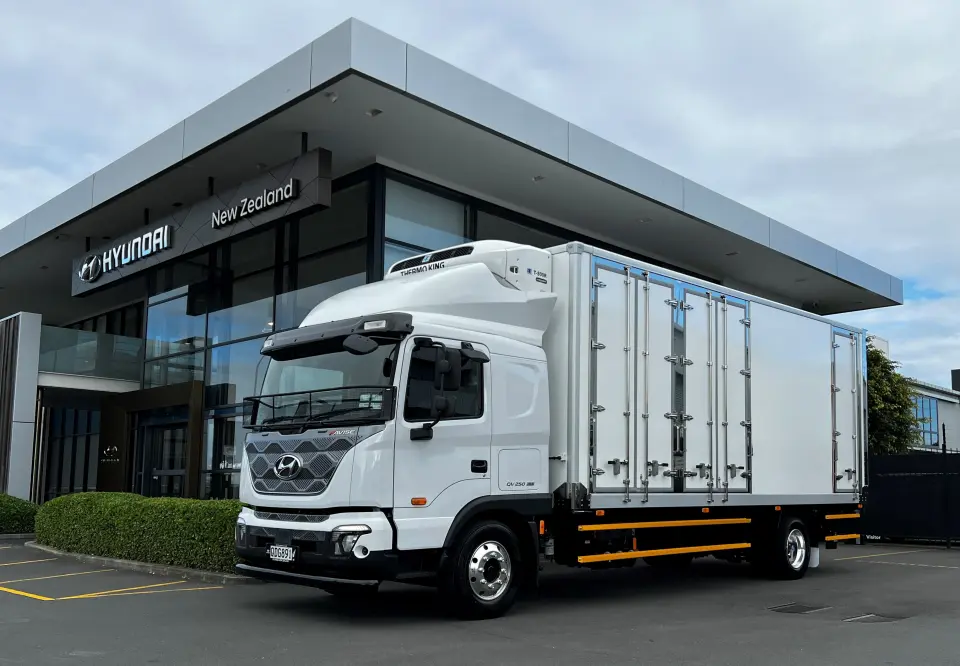
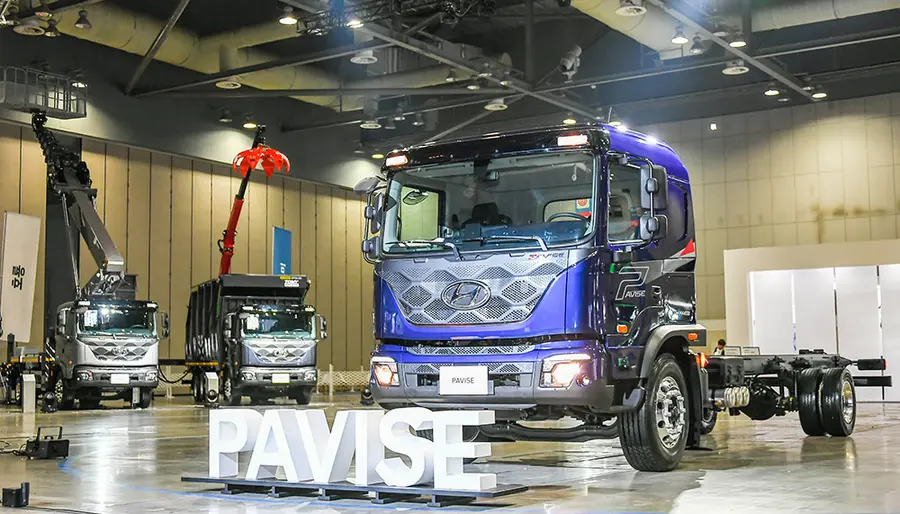
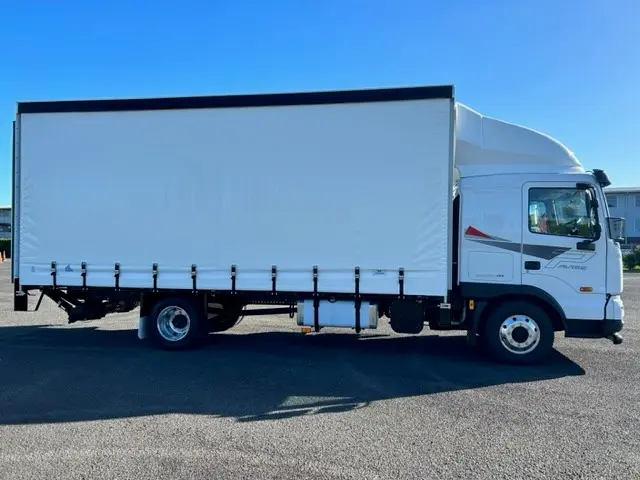
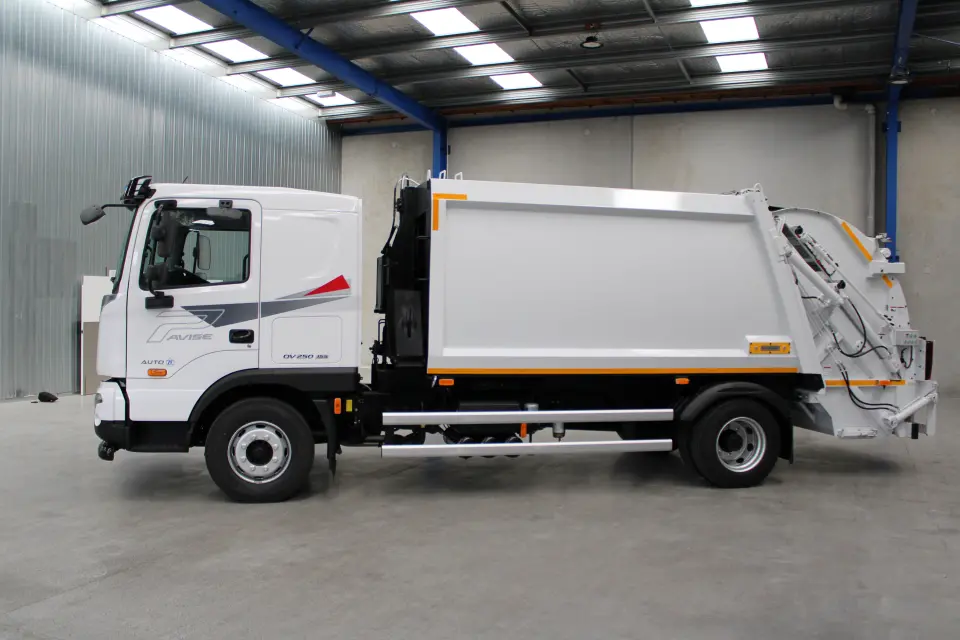
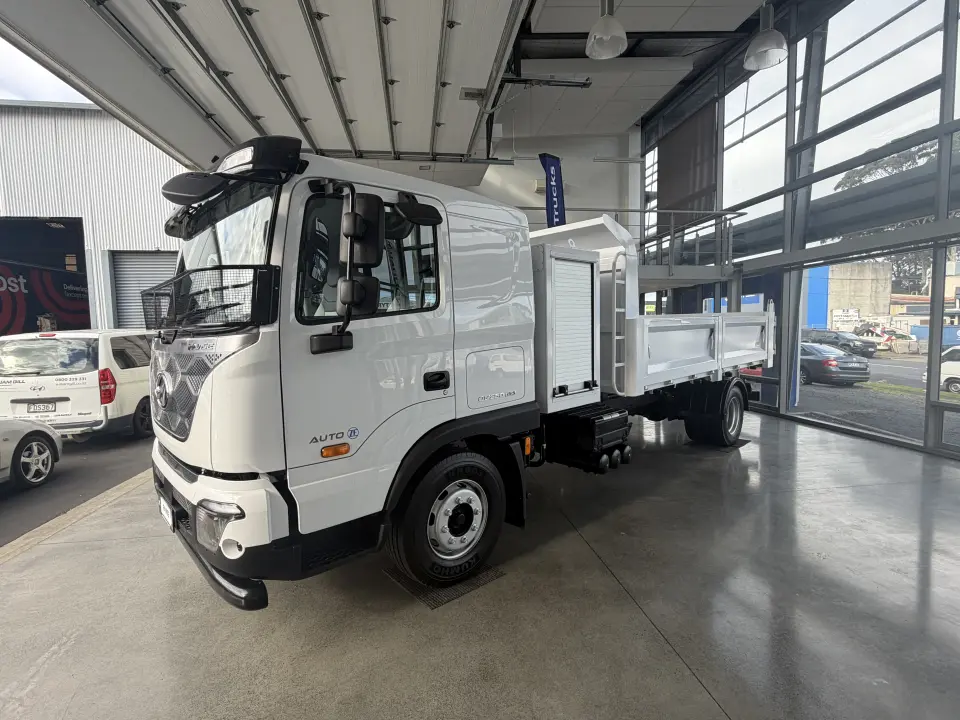
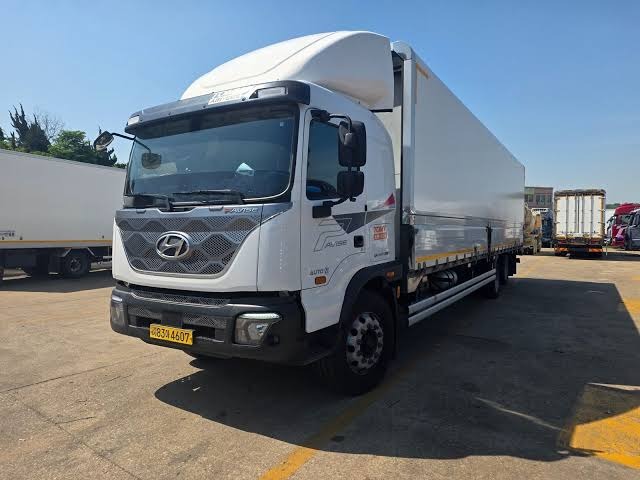
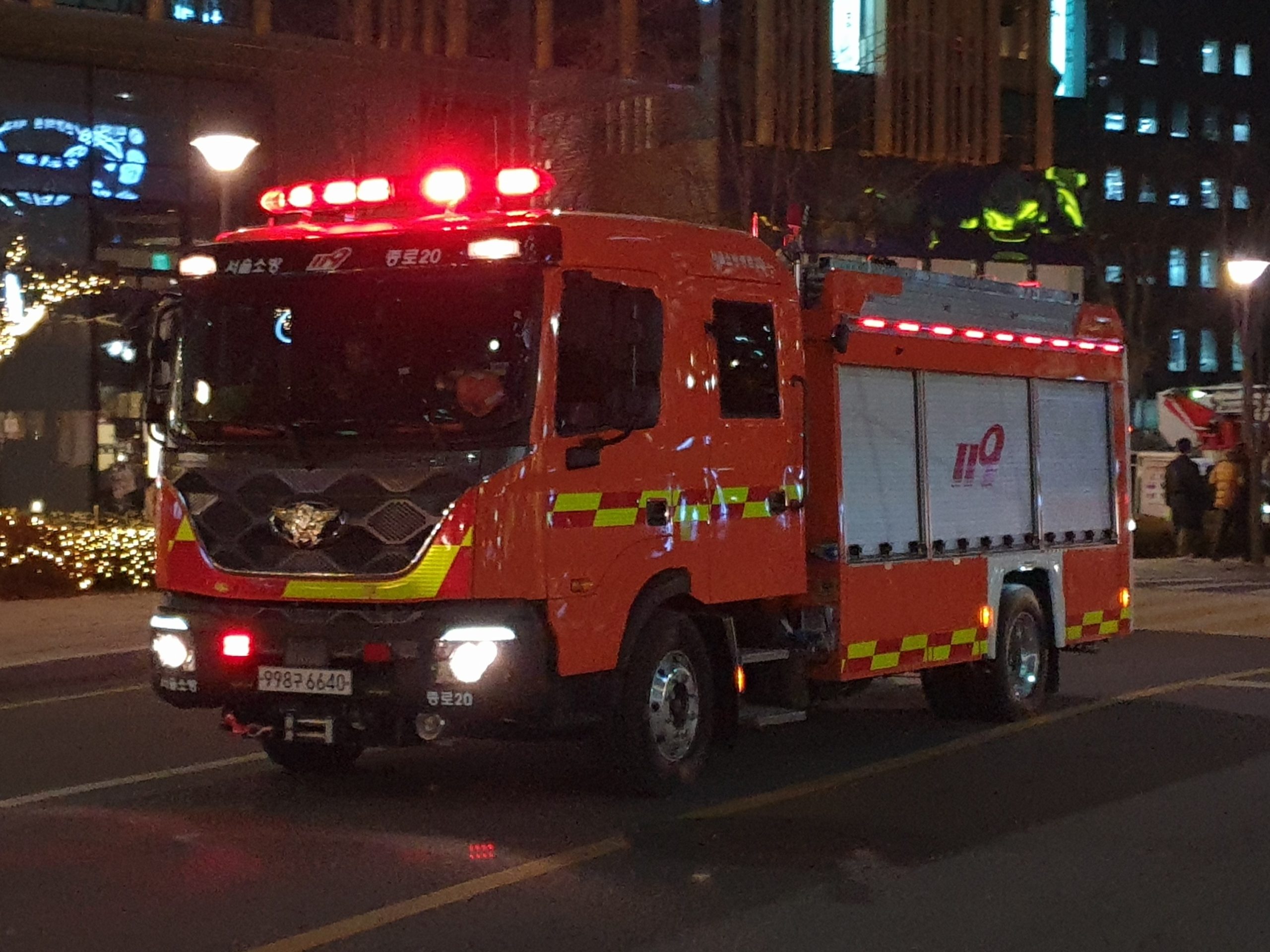
The Pavise was designed to fill the gap between the Mega Truck and the heavy Xcient, and at launch it was described as a new semi-large class. It comes as a 4×2 and a 6×2 on two platforms, standard and high-load, with a payload of 5.5 to 13.5 t (12,125 to 29,762 lb) and a wheelbase of up to 7 m (276 in). One report mentions a platform of up to 17 t, and more than ten special bodies were shown at launch, including wing body, crane, refuse, refrigerated, ladder and fire-fighting versions.
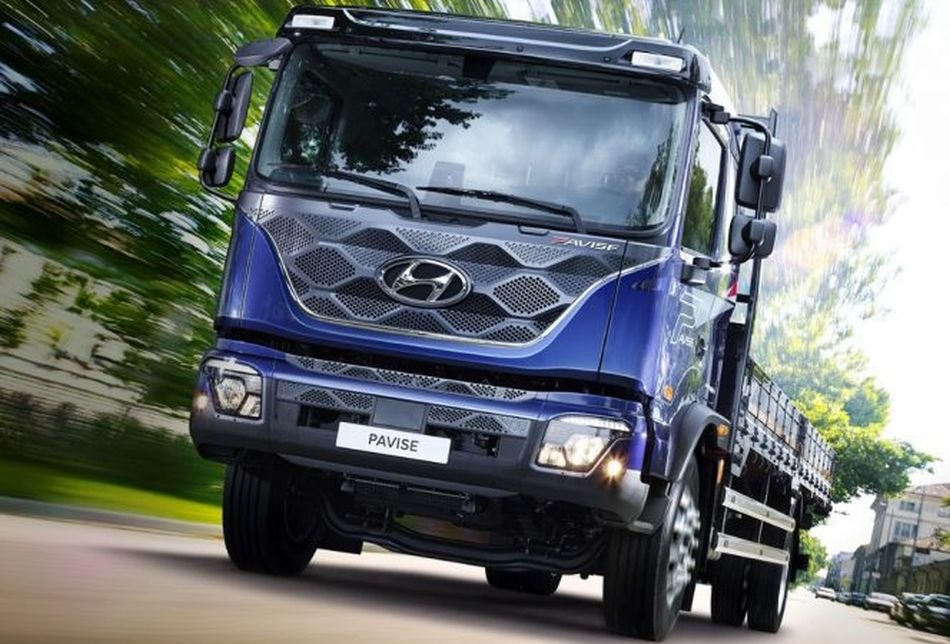
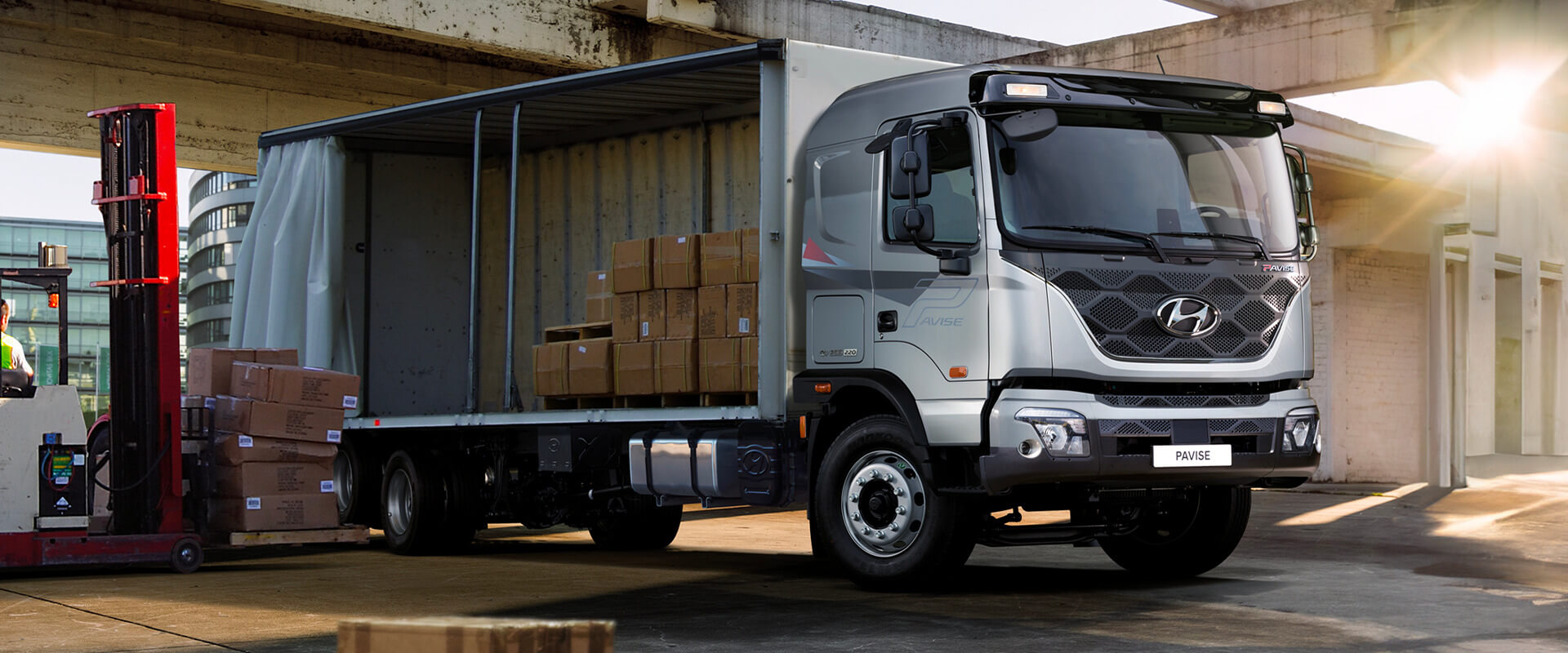
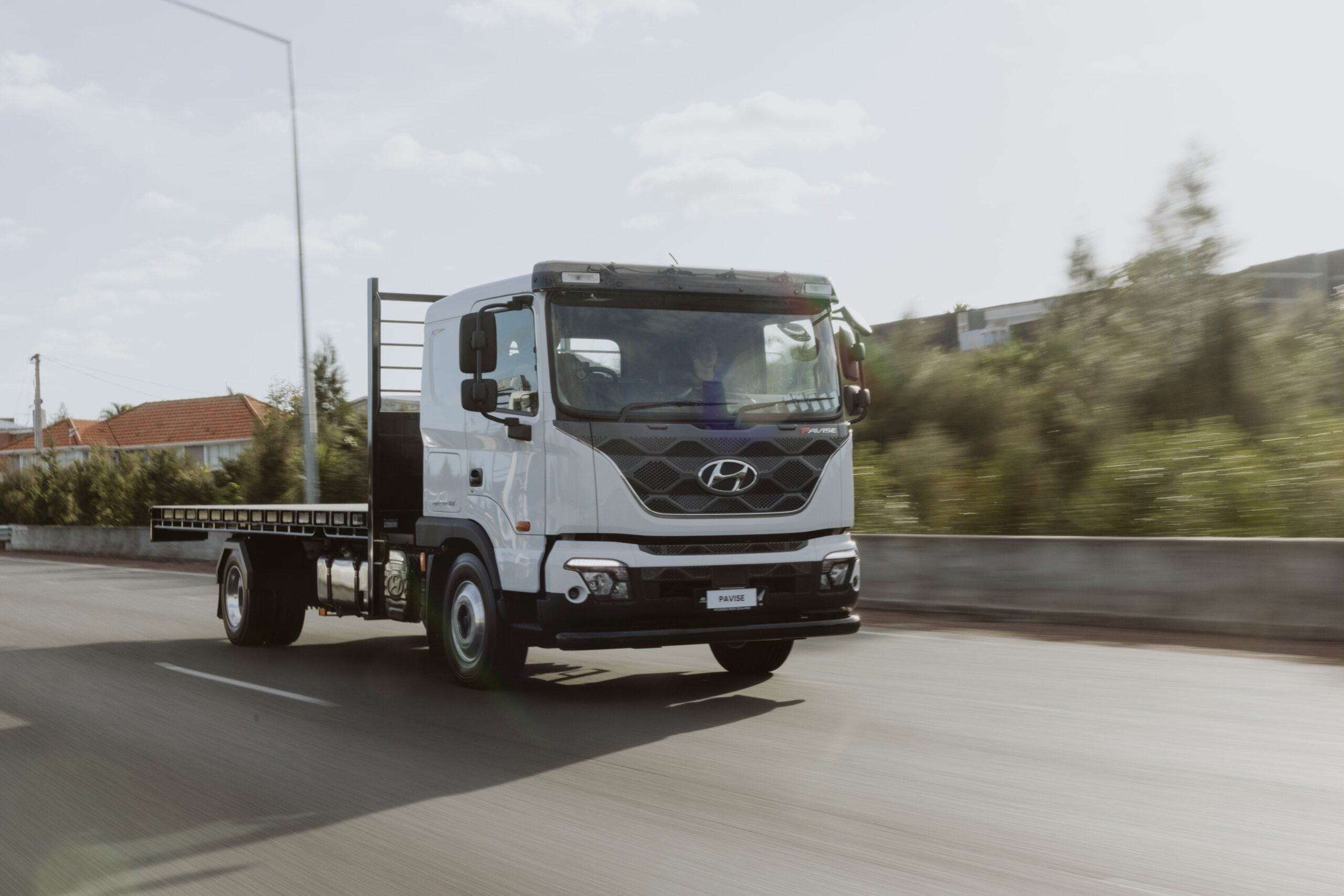
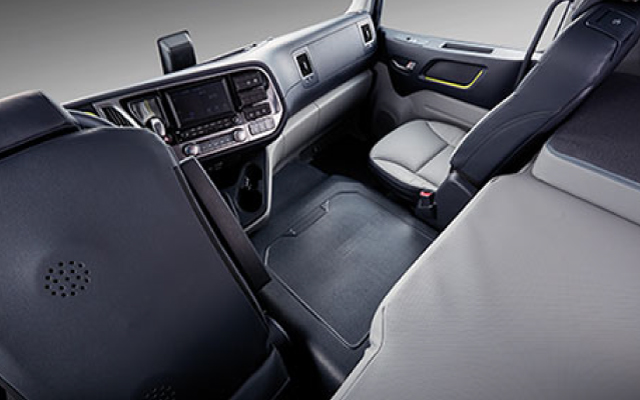
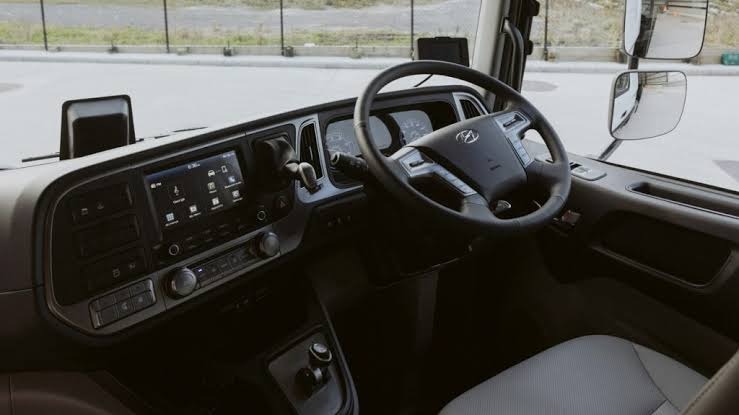
The biggest change from the Mega Truck is the cab, which Hyundai describes as built to the scale of a heavy truck. It is a steel sleeper cab with three seats, an interior height of 1,595 mm (62.8 in) and 6.7 m³ (237 cu ft) of cab space. Overall width without mirrors is 2,320 mm (91.3 in) and height 2,646 mm (104.2 in). The driver’s seat and controls are angled slightly toward the driver, and the start button, shift lever and parking lever were arranged with the driver’s reach in mind.
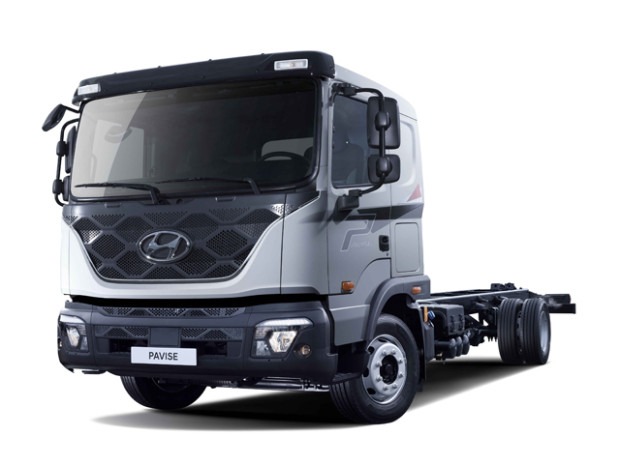
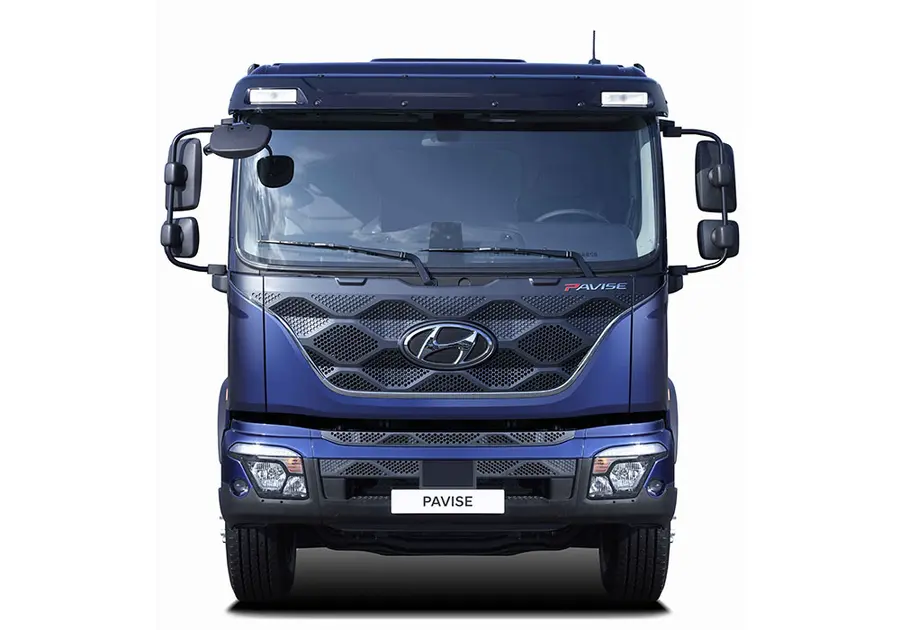
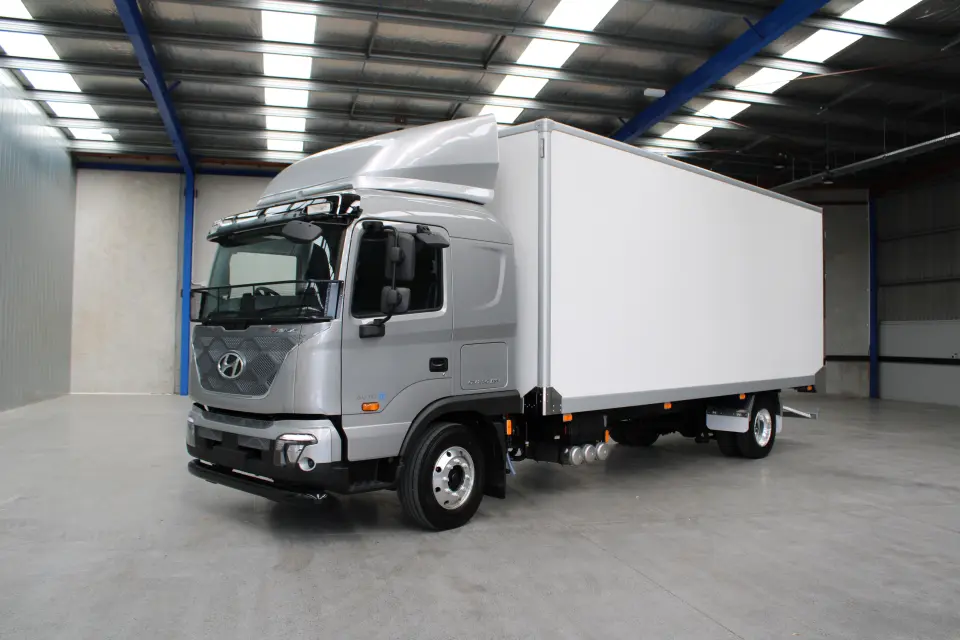
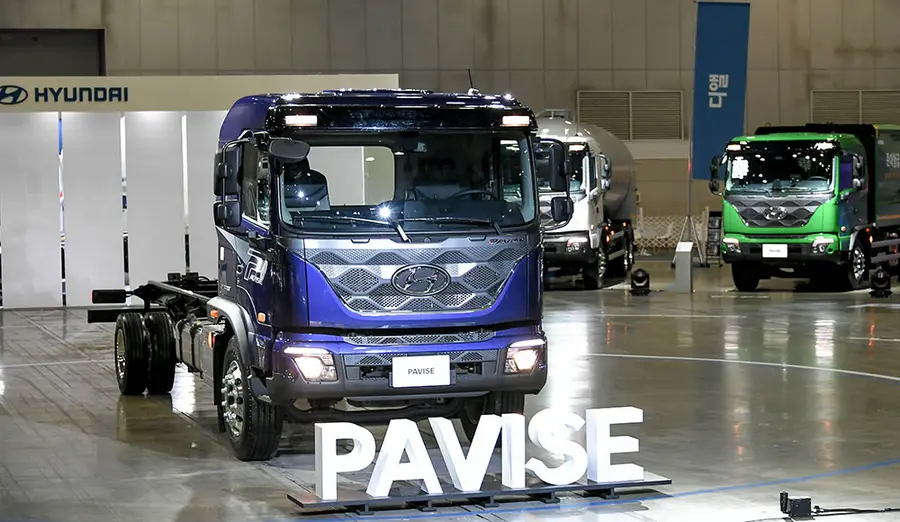
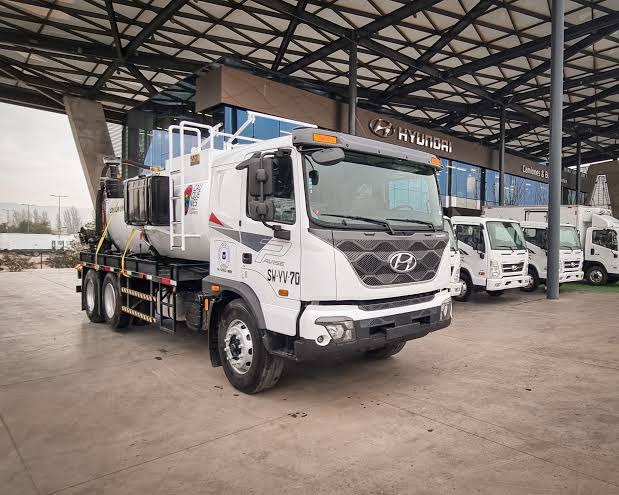
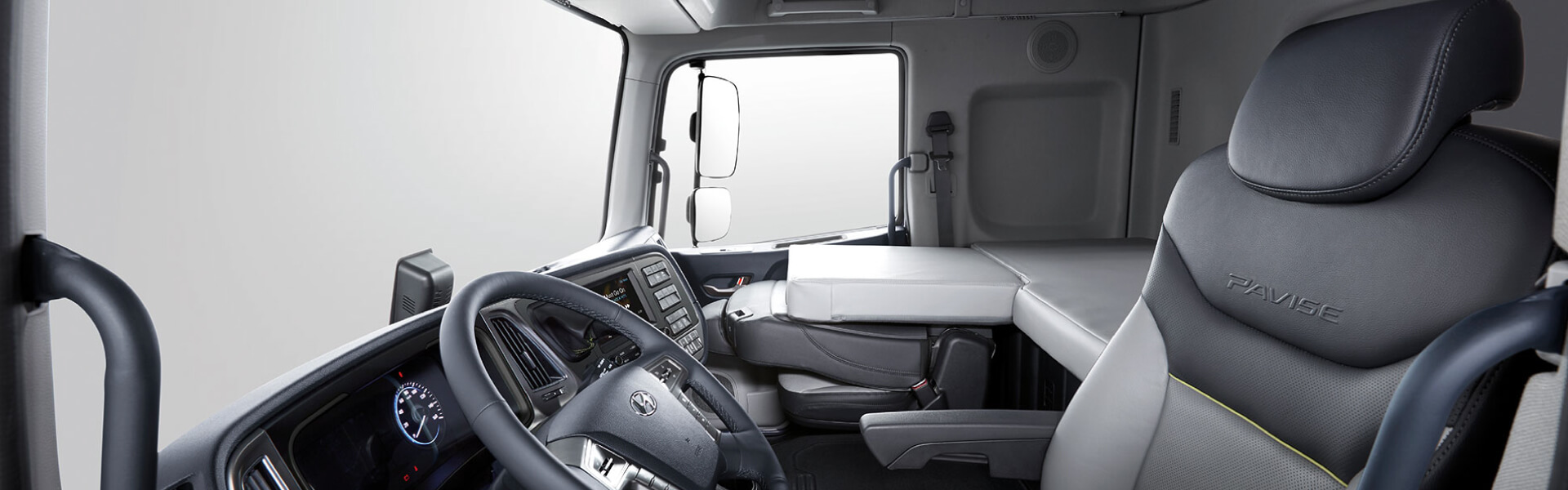
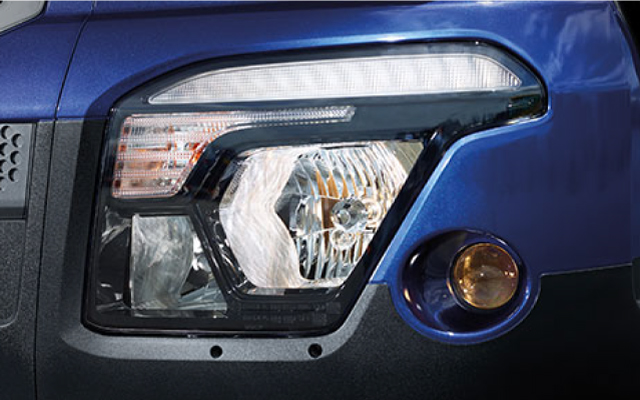
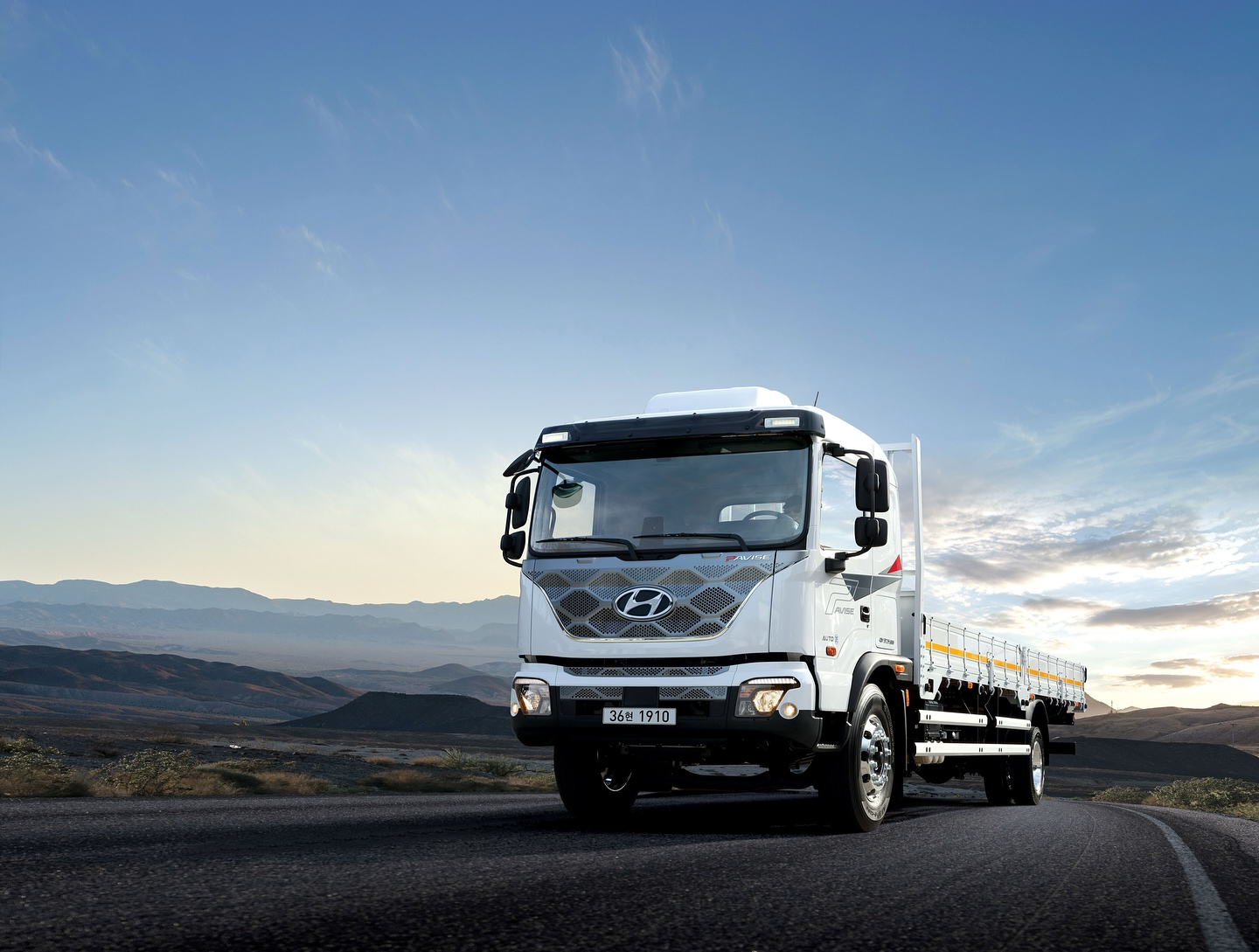
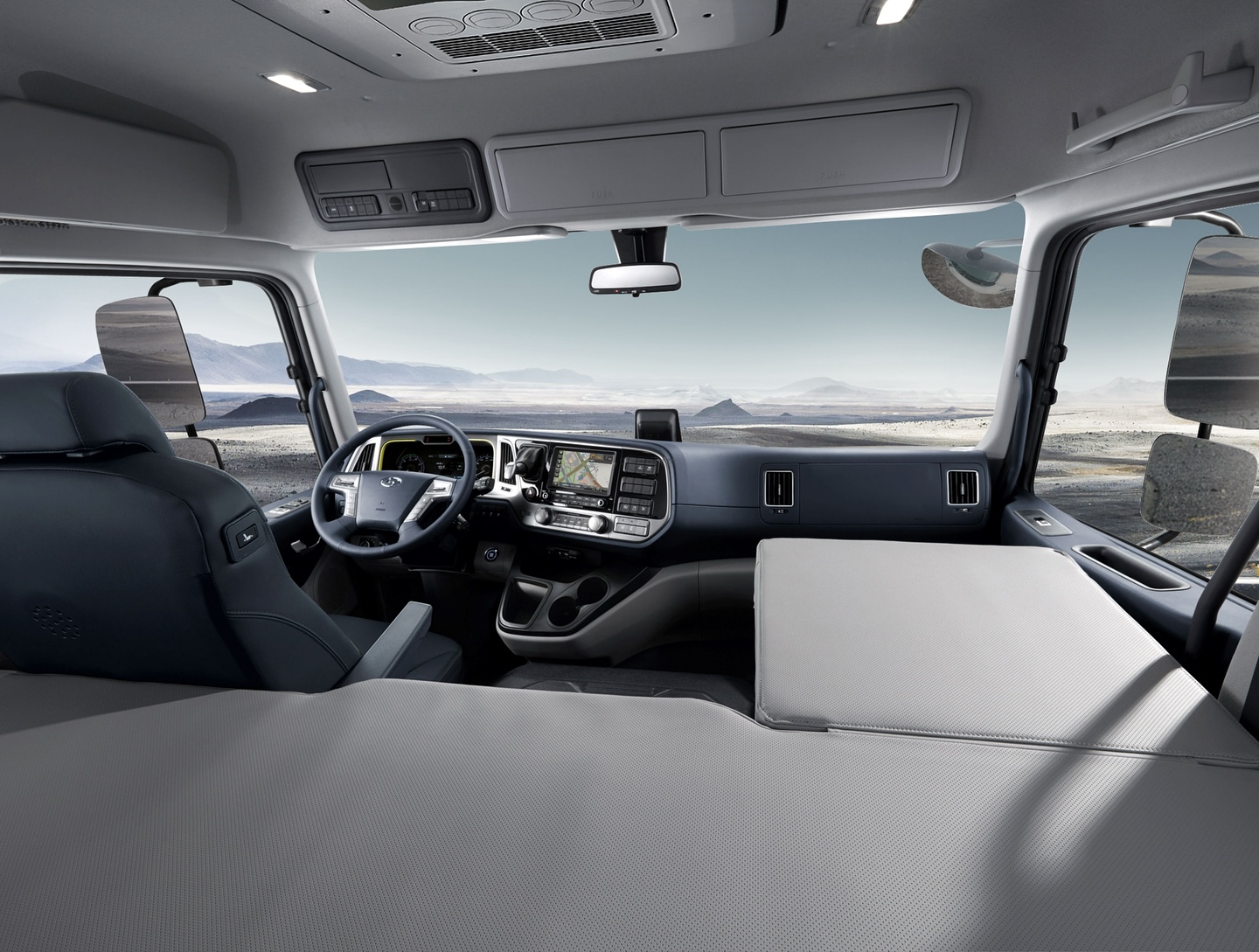
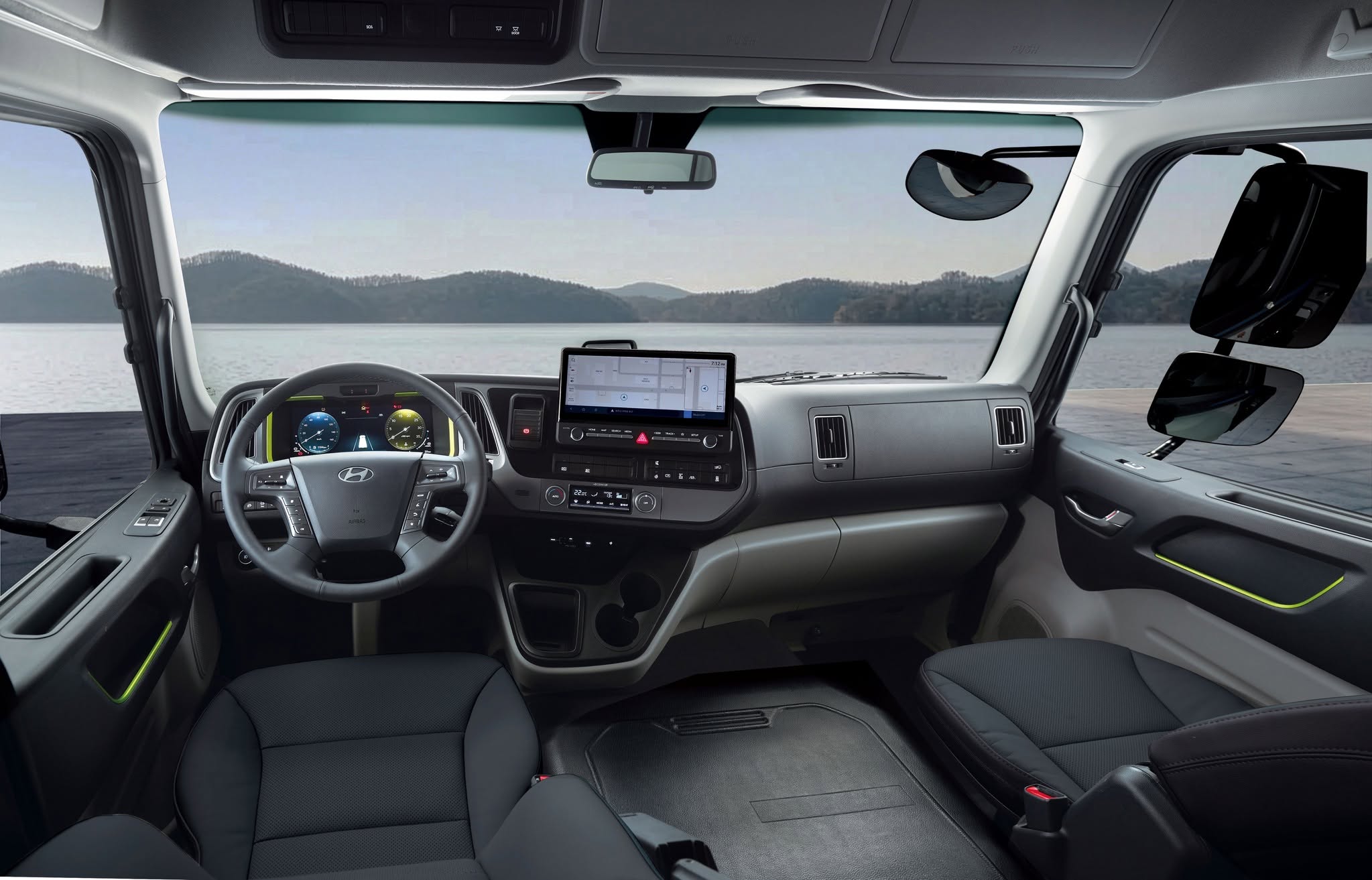
The front is dominated by a large grille in a honeycomb pattern with a big H badge, flanked by LED daytime running lights. Inside, a two-tone dark blue and grey interior with colour accents, a digital instrument cluster and a large central touchscreen, with navigation for commercial vehicles and a wireless phone charger.
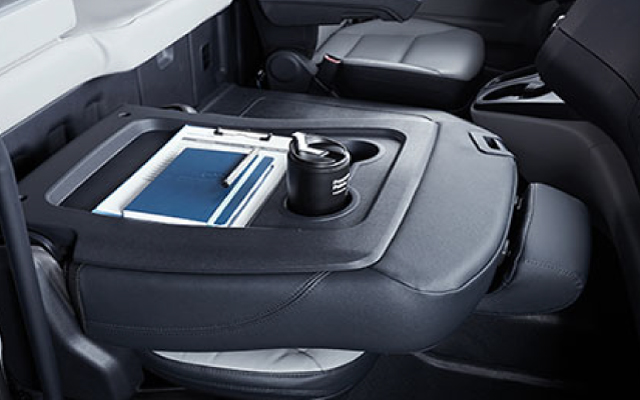
Screen sizes differ by market, with 8 inches in Australia and 7 inches in Peru. The driver’s seat has hydraulic suspension and reclining backrests, and the passenger seat is asymmetric and can be folded up to create a work surface or standing room.
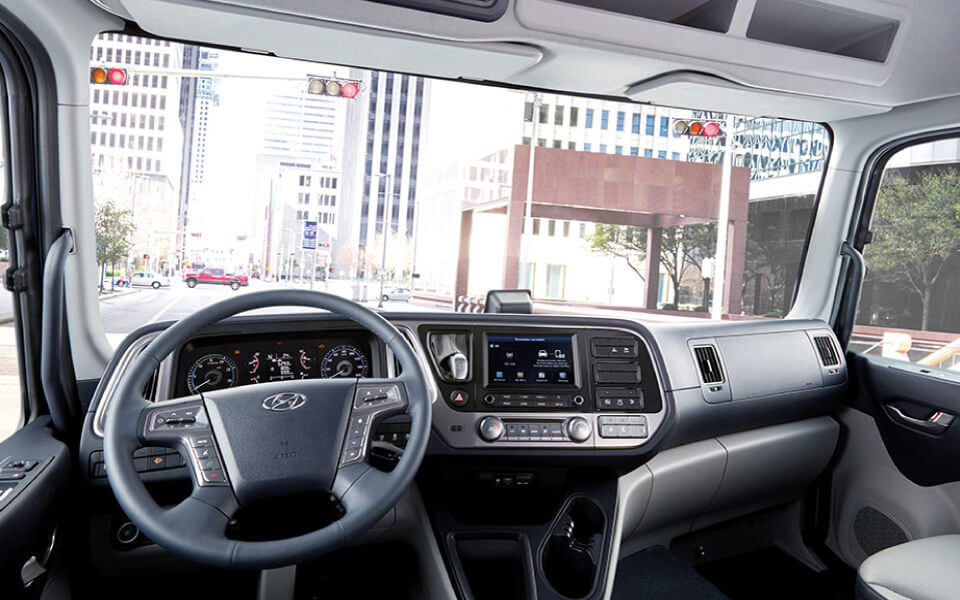
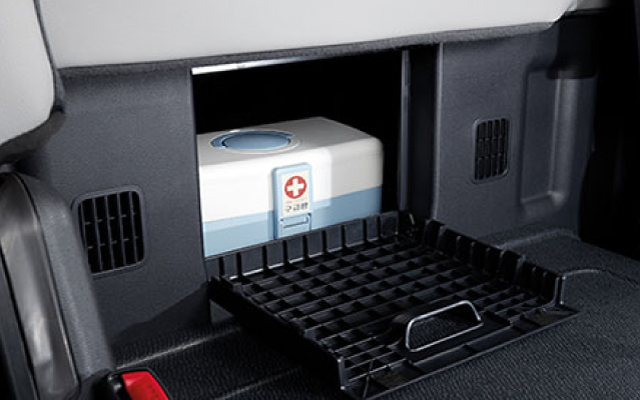
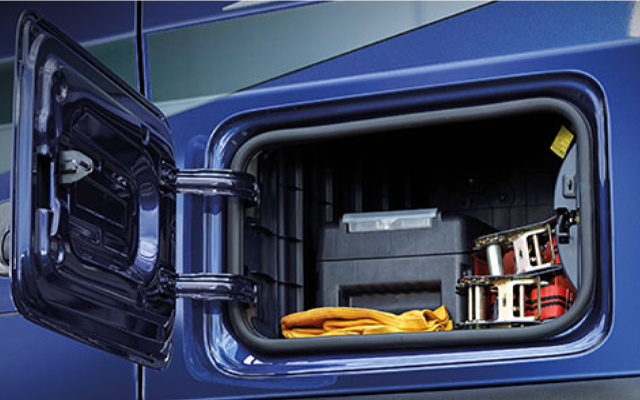
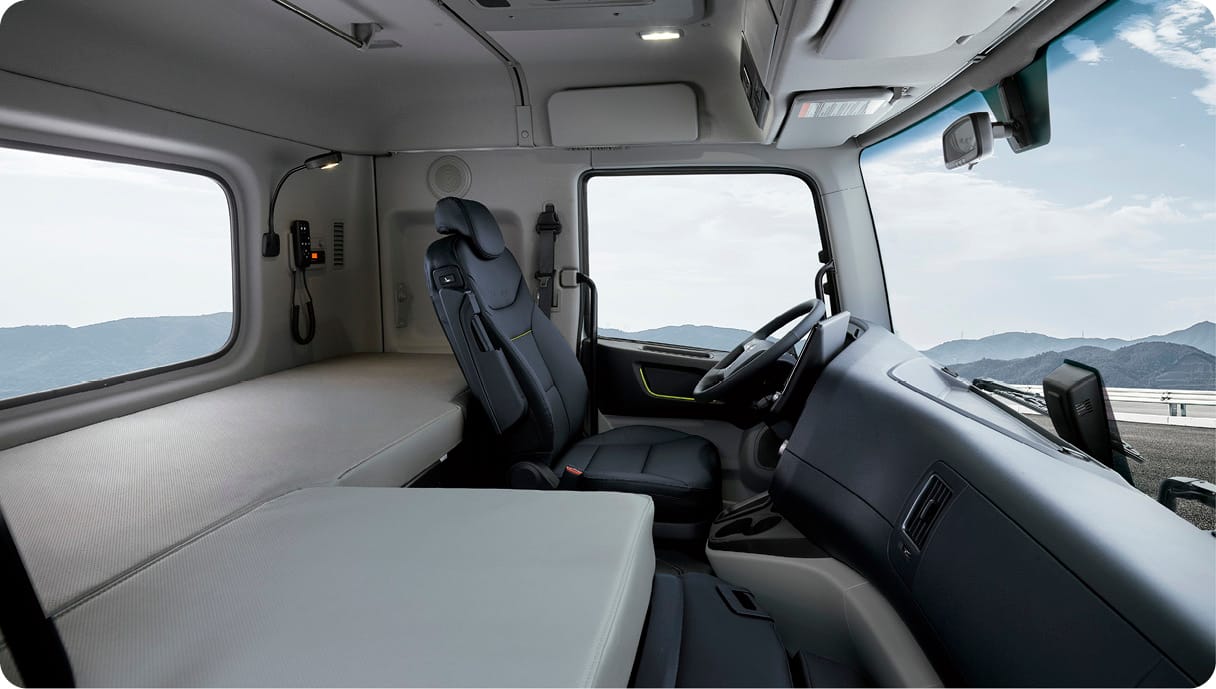
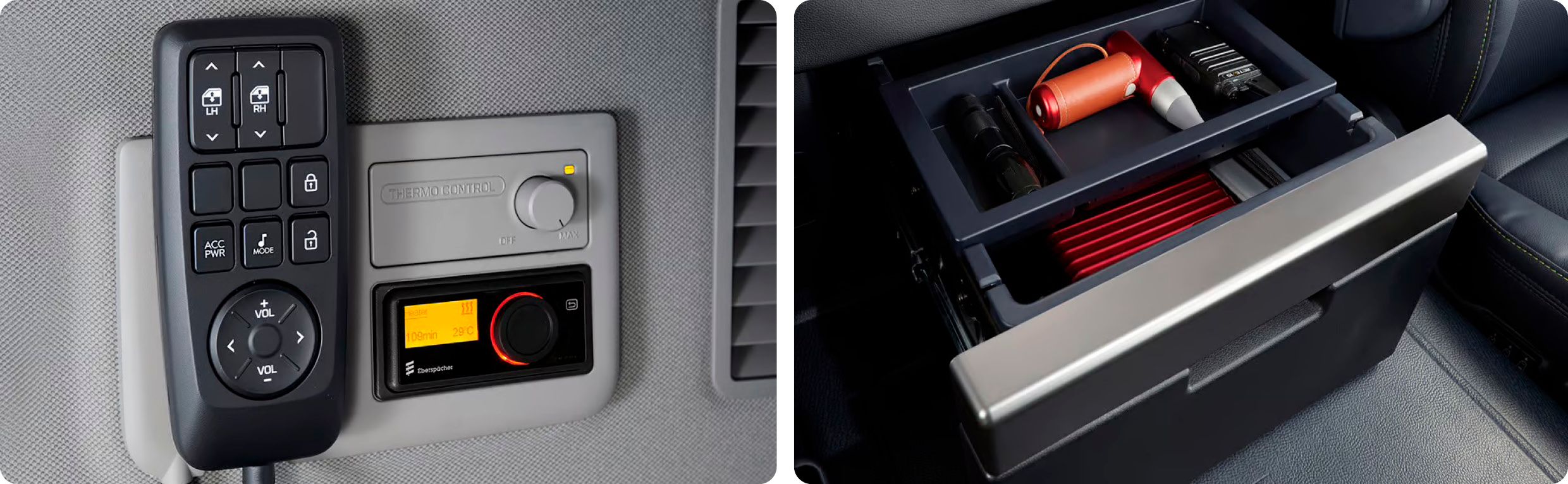
Storage is a main theme of the cab: there is a console above the windscreen, a tray at the top of the dashboard, a large space under the bed, and wide outside lockers for tools and straps. The bed can be extended on the passenger side for rest between runs, and the Korean versions can be ordered with a 220 V inverter and an engine-off heater. Bluelink telematics adds remote start, a vehicle finder and fault-code display. A rear-view camera, six mirrors and a wide windscreen are stressed for visibility.
The Pavise was one of the first Hyundai trucks in its class to offer driver-assist systems that had earlier been limited to heavy trucks. Forward collision-avoidance assist (FCA), lane departure warning (LDW) and rear parking assist were options at launch, and export versions add autonomous emergency braking, vehicle dynamic control, an emergency stop system and driver and passenger airbags. An electronic braking system is said to reduce rollover risk in sudden manoeuvres. Tyre pressure and temperature warnings (below 80% pressure, or above 110 °C / 230 °F) appear in the cluster.
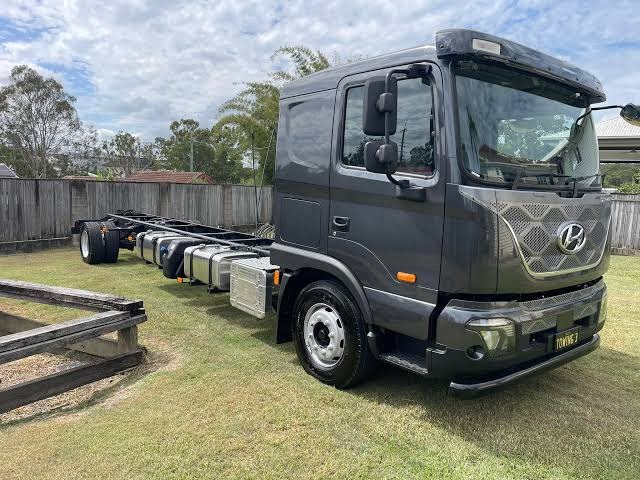
A coasting function called Eco Roll, said to be the first in its class, shifts the gearbox to neutral on downhill and flat sections, with an importer claim of about 2–3% fuel saving. An eco-driving display gives real-time advice to the driver. The cab sits on full-floating air suspension, and the rear axle can have air springs that keep the body stable and allow its height to be adjusted for loading. The frame is made of high-tensile steel with standardised mounting holes to ease the fitting of bodies.
The Korean launch engine is a 6.8 L (6,798 cc / 415 cu in) inline-six turbodiesel, referred to as “7-liter class” in some launch reports. It is rated at 280, 300 or 325 PS (206, 221 or 239 kW) depending on gross weight, and the top 325 PS version has 120 kgf·m (1,177 Nm / 868 lb-ft). The Euro 6 export engine, coded D6GB3L, develops 300 PS (221 kW) at 2,300 rpm and 1,079 Nm (796 lb-ft) at 1,400 rpm. It has a 107 × 126 mm bore and stroke, a 17.2:1 compression ratio and DOC, DPF and SCR exhaust treatment. In some markets the Pavise is sold with a 5.9 L (5,899 cc / 360 cu in) D6GA2E Euro 4 engine of 251 hp (185 kW) and 95 kgf·m (932 Nm / 687 lb-ft).
The Korean market is reported to offer a ZF 12-speed automatic, an Allison 6-speed automatic and a ZF 6-speed manual. Export versions use a ZF 9-speed manual (9S1310) or a ZF 8-speed automatic (8AP1200), and other sources also mention a ZF 12-speed automated manual. The export Euro 6 truck has air disc brakes with 377 mm (14.8 in) rotors and an electronic braking system, while the Euro 4 version uses drum brakes. Front and rear axle capacities are 6,000 and 9,500 kg (13,228 and 20,944 lb), and the fuel tank holds 200 L (53 US gal) or, in New Zealand, 250 L (66 US gal), with a 25 L (6.6 US gal) AdBlue tank.
The export 4×2 comes with wheelbases of 4,300, 4,900 and 5,700 mm (169, 193 and 224 in) and overall chassis lengths of 7,665, 8,615 and 9,765 mm (302, 339 and 384 in). Curb weights are 4,755, 4,820 and 5,080 kg (10,483, 10,626 and 11,199 lb) respectively. Gross vehicle weight is 12,000 kg (26,455 lb) or 15,250 to 15,500 kg (33,620 to 34,172 lb), with a combined weight of 25,000 kg (55,115 lb). The 6×2 version has a 22,000 kg (48,502 lb) gross weight and a 31,000 kg (68,343 lb) combined weight.

Brochures
2025 Update
Hyundai introduced the 2025 update of the Pavise medium truck on 21 January 2025.
The most notable addition was a new option for the top Prestige trim: a roof-mounted engine-off air conditioner supplied together with a 230 Ah high-capacity battery. The system runs from the battery and can keep the cab cool with the engine switched off for up to 8 hours when the power-saving mode is selected. Hyundai says it also reduces fuel consumption, since the driver no longer has to idle the engine for cooling.
Two changes concerned the interior. An open-type storage compartment was newly added to the passenger-side trim of the bed area, and the cup holder on the console was enlarged. Wireless smartphone charging became standard on all trims, and its output was raised from 5 W to 10 W.
Brochures
2027 Hyundai Pavise
Hyundai launched The New 2027 Pavise in South Korea on 7 May 2026, about seven years after the original Pavise appeared in 2019. It was presented at the Experience Day in Incheon.
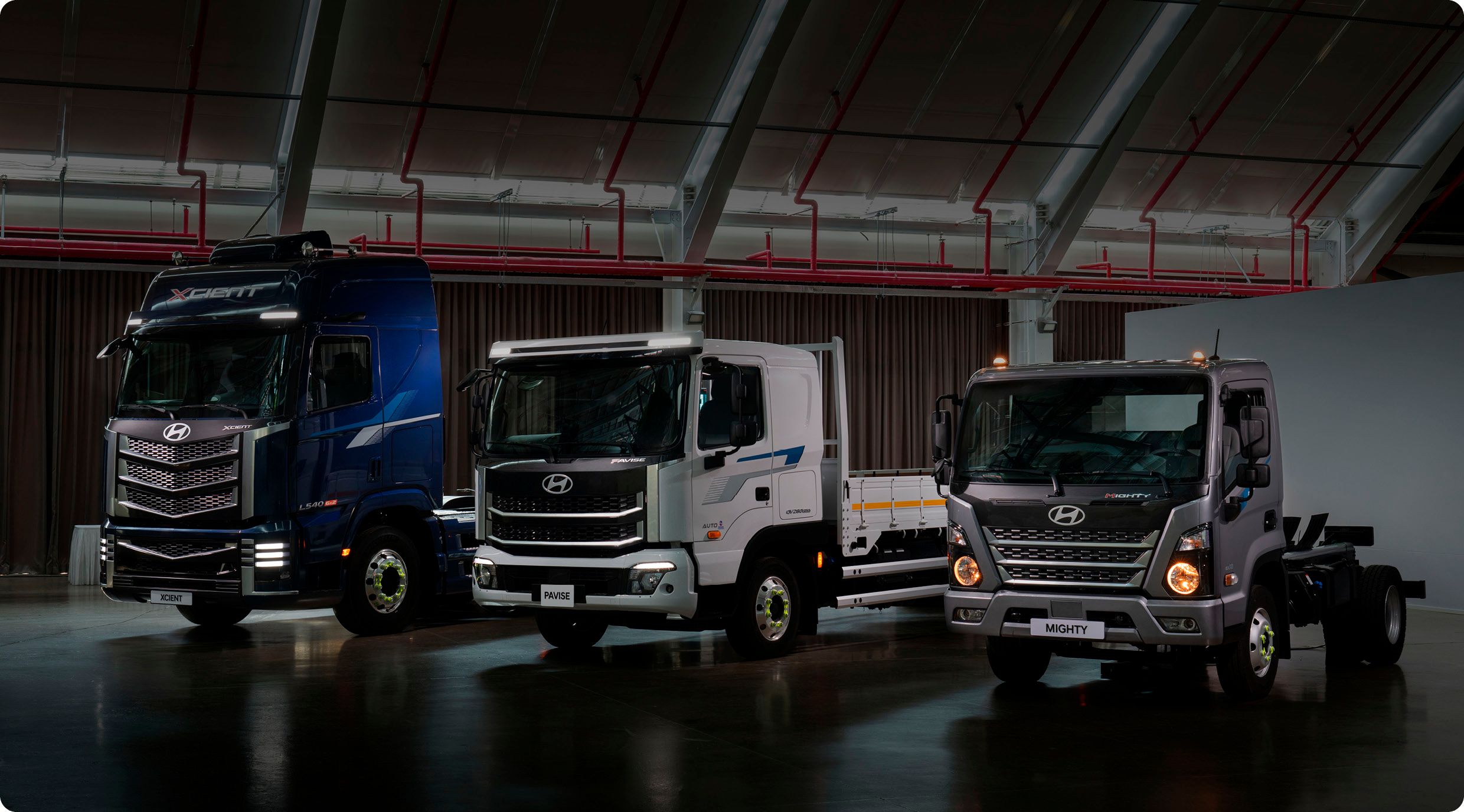
Hyundai’s design team led by Roh Jae-seung, head of the commercial vehicle design team, aimed at a single family look from the Xcient through the Pavise to the Mighty, with a bold, solid and modern image.
The front end carries new vertical and horizontal H graphics and a three-dimensional grille, with a cube-mesh pattern. The roof visor at the front top is reportedly the same as on the Xcient. The windshield is now bonded directly to the body (direct glazing), which Hyundai says increases body rigidity and reduces outside noise.
In the cab, the Pavise gets a 12.3-inch digital instrument cluster and a 12.3-inch AVN display. The new infotainment system supports over-the-air updates and wireless Android Auto and Apple CarPlay. Push-button start with a smart key, an electronic parking brake with auto hold and fully automatic air conditioning are listed. The rear camera was reportedly upgraded to a 1-megapixel wide-angle unit with wide-view and top-view modes.
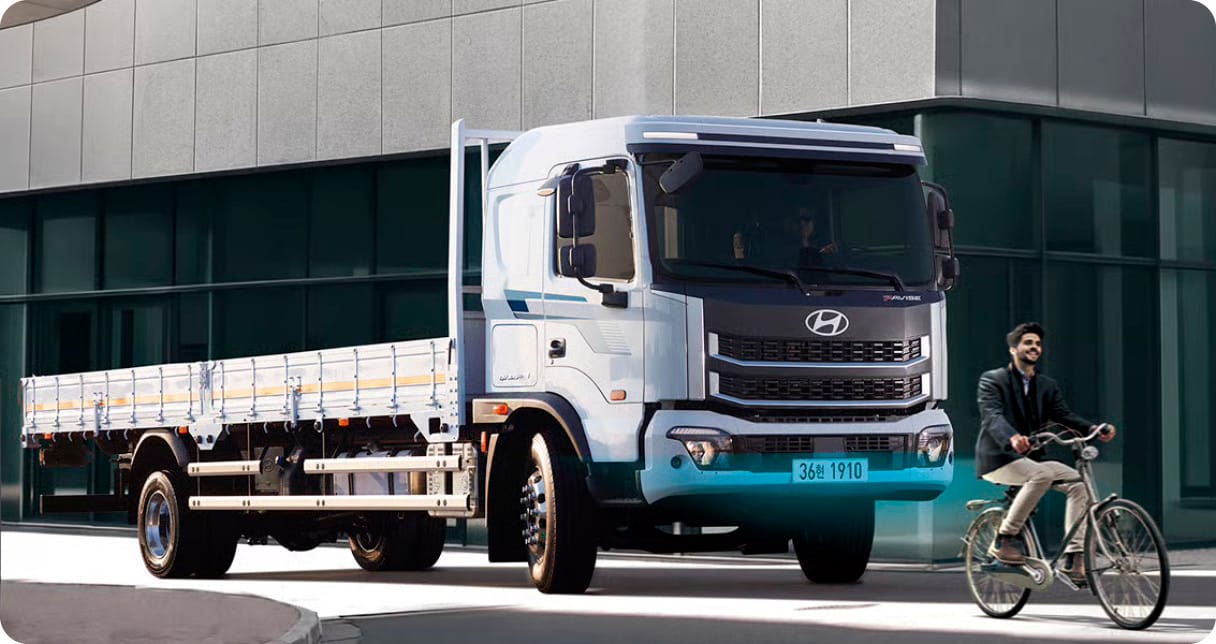
Among driver aids, forward collision-avoidance assist is said to detect pedestrians and cyclists, and lane departure warning, rear parking-distance warning and hill-start anti-rollback are mentioned.
The previous 6-speed Allison automatic was replaced by a 9-speed automatic, which Hyundai says widens the gear-ratio spread to improve performance and fuel economy.
A new Prestige Max trim is aimed at customers needing heavy loads on long wheelbases. Its 4×2 chassis-cab has a main frame 280 mm (11.0 in) high and 8 mm (0.31 in) thick, with a 262 mm (10.3 in) reinforcement frame. Earlier frame values of 240 mm (9.4 in) and 7 mm (0.28 in) are quoted for comparison. Hyundai claims a maximum load of 8 to 8.5 t (17,637 to 18,739 lb).
Brochures