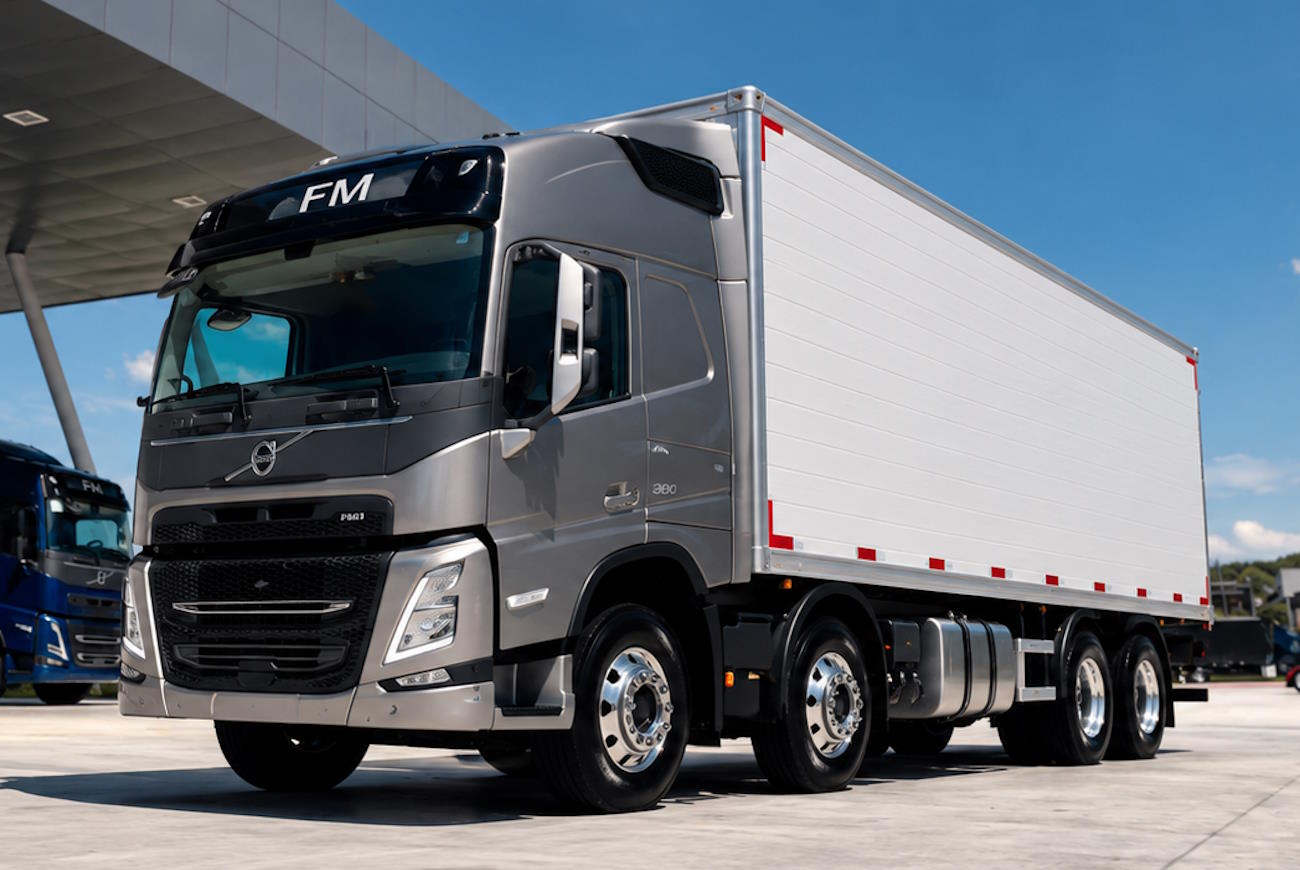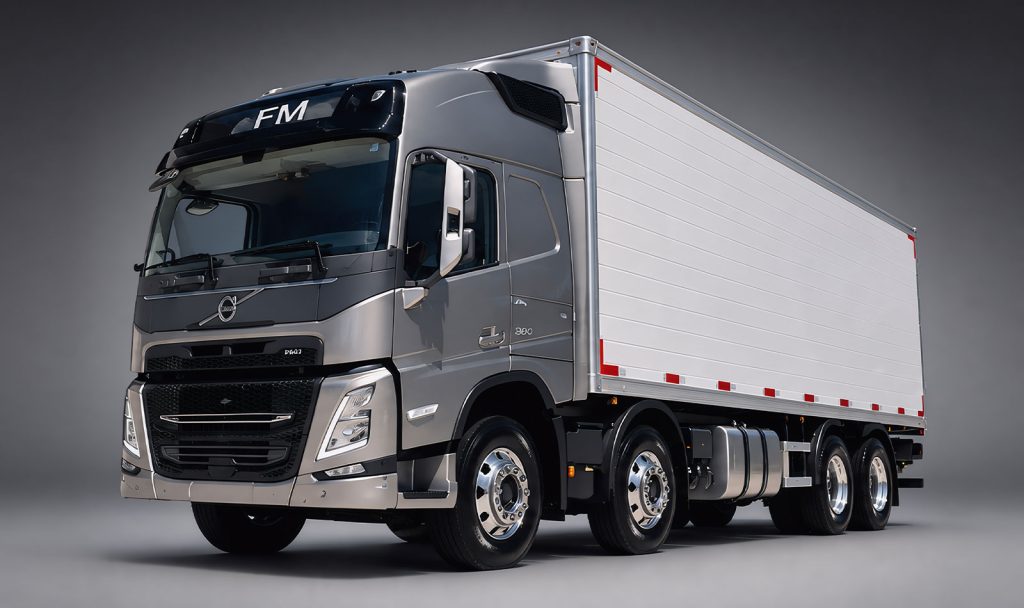
Volvo Caminhões has presented the Volvo FM 380 8×2 at Fenatran 2026, the truck show held in São Paulo from 9 to 13 November. The rigid truck has four axles, two steered axles at the front and a technical gross weight of 36.5 t (80,469 lb), and is aimed at road, regional and urban distribution.
The FM 380 8×2 is powered by a 13-litre (793 cu in) diesel engine rated at 380 cv (280 kW), and Volvo says that it shares its engine, transmission and axles with the heavy FH range. The gearbox is the seventh-generation I-Shift automated manual transmission. Peak torque, the engine speed range and fuel consumption were not published.
The 8×2 layout puts two steered axles at the front and two axles at the rear, and the company says that this gives more payload capacity and a better distribution of weight on the axles, together with good manoeuvrability. The technical gross weight of 36.5 t is the structural capacity stated by the manufacturer, and the weight that is allowed on the road depends on the configuration, the axle limits and the operating conditions.
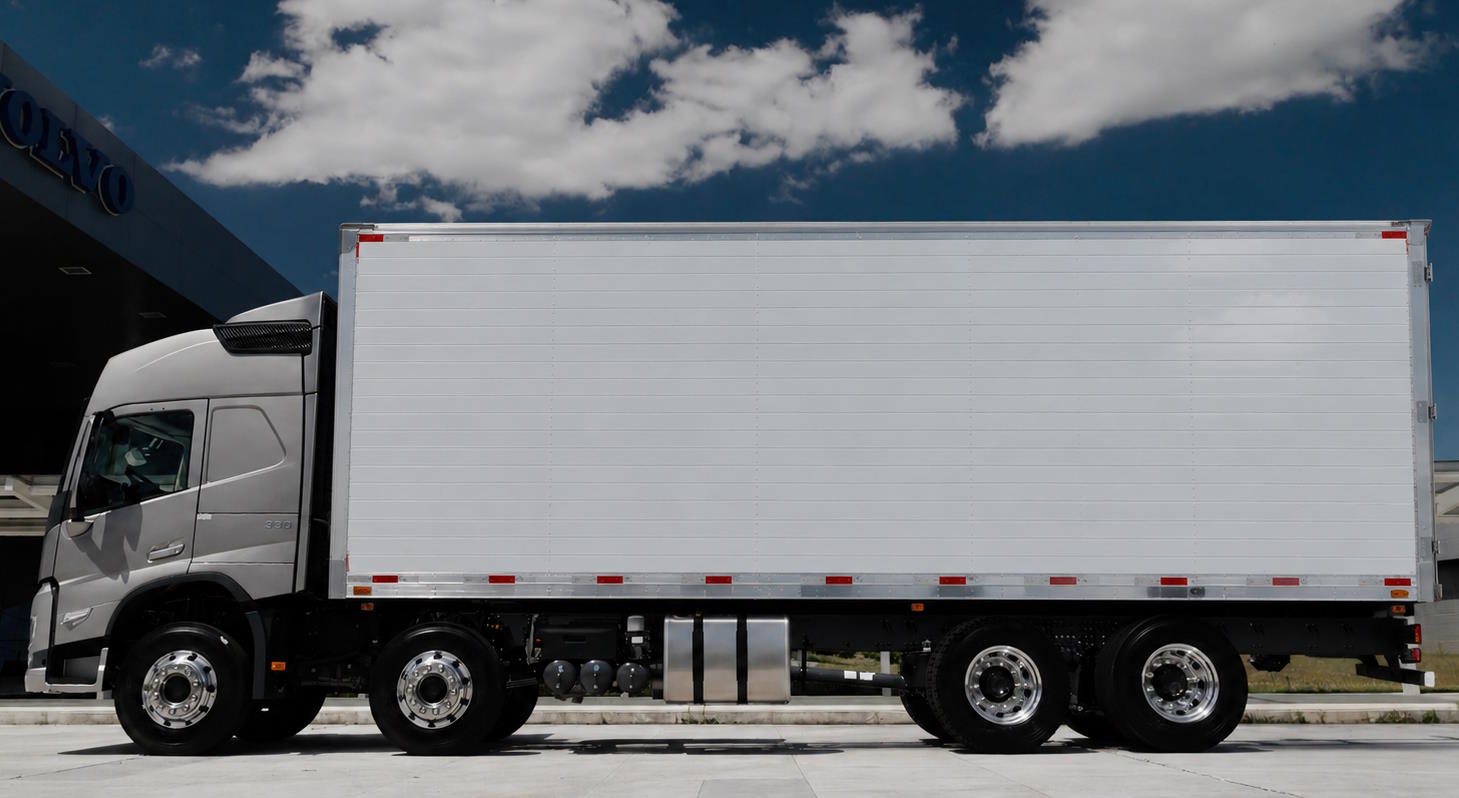
The truck has air suspension and the cab of the FM range, described as spacious and designed for long journeys. Standard equipment includes a sunroof, climate control and a 9-inch (229 mm) multimedia screen. The Volvo Engine Brake VEB+ has a braking power of 510 cv (375 kW) and it is meant to reduce wear of the service brakes and fuel use on descents.
The truck is available with the I-See system, which uses artificial intelligence and stored road data to read the topography ahead and to choose gears and manage fuel accordingly, even on roads the driver does not know. For safety, it has the Volvo Pacote 4 safety package with adaptive cruise control and automatic emergency braking, which uses a radar and a camera and also takes into account vulnerable road users. Volvo links the package to its vision of zero accidents.
Volvo names fuel transport, fresh produce, urban and regional distribution as typical uses, and the chassis is intended for sider, box, refrigerated and dry-cargo bodies, among others. Alcides Cavalcanti, executive director of Volvo Caminhões, said that the truck combines a wide cab, a robust chassis, a high level of technology and a robust 13-litre engine for different transport demands. Jeseniel Valério, sales engineering manager at Volvo, said that the model strengthens the company’s commitment to a broader portfolio and keeps the robustness and reliability of the F range.