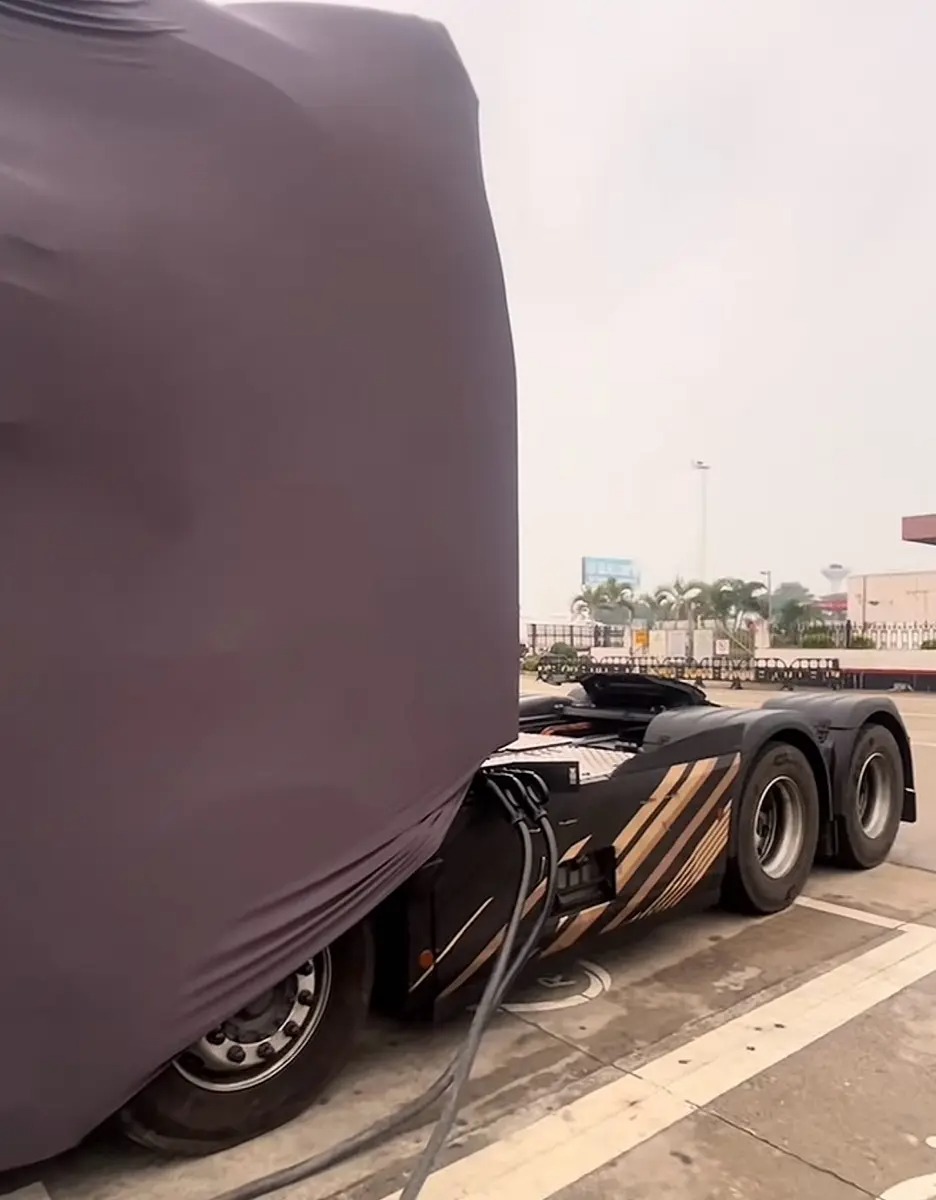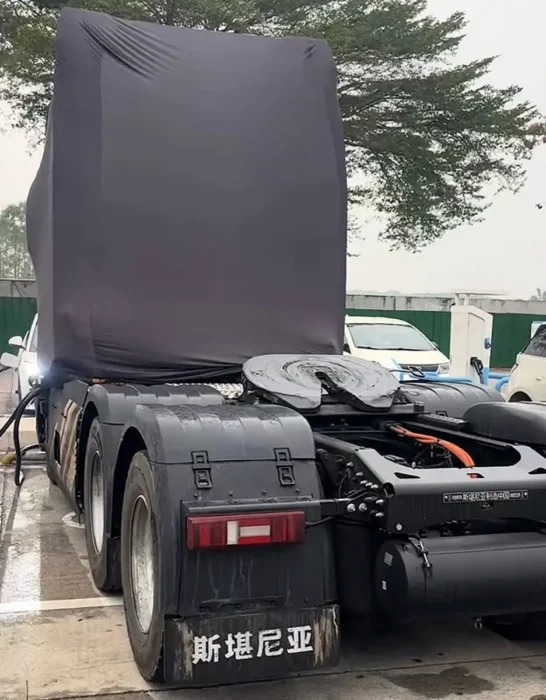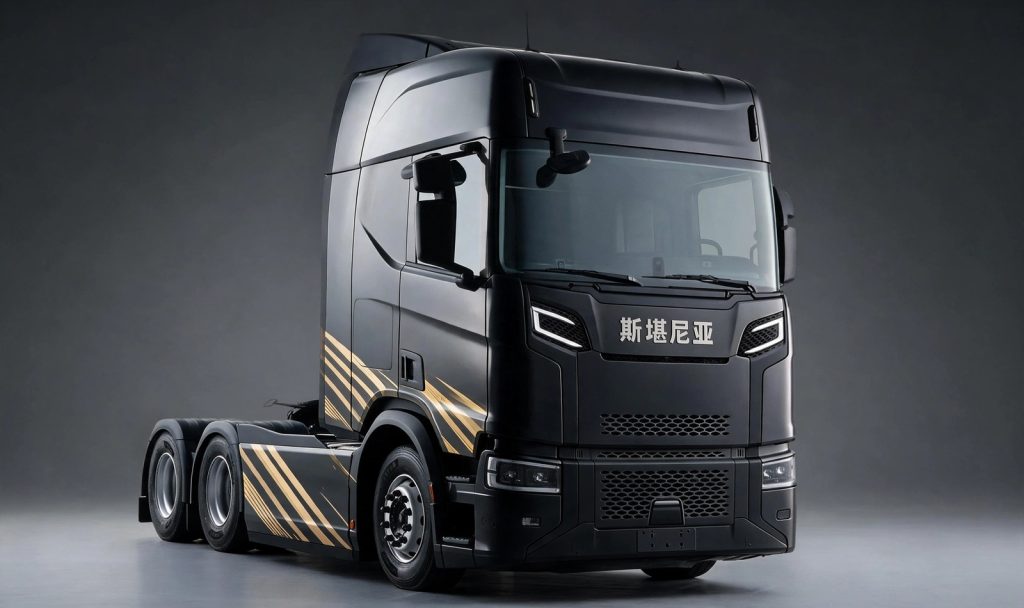
Photos of a camouflaged Scania electric tractor under test in China have appeared online, showing a different electric layout from the one Scania uses in Europe. The cab is fully masked, and a Chinese-language nameplate on the rear of the frame identifies the truck as a new Scania tractor. It is reportedly a three-axle tractor unit.
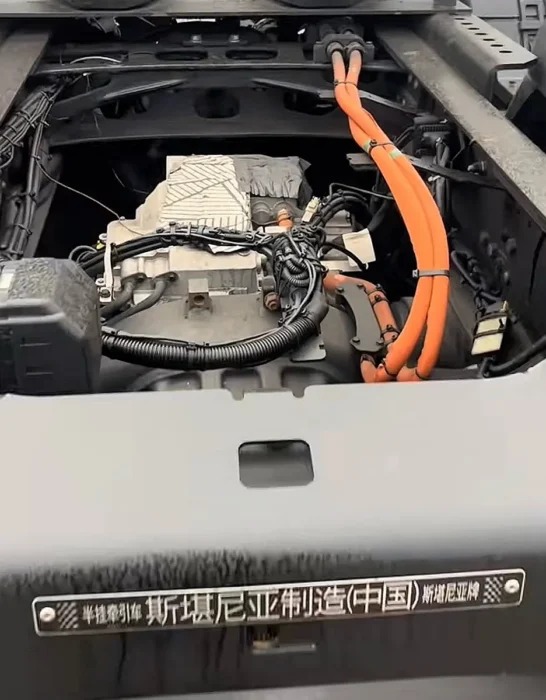
The electric motor sits directly on the rear axle, in an e-axle layout without a driveshaft. This removes some transmission parts and frees space near the frame, which can be used for larger battery packs. A similar axle-mounted layout is used on other electric trucks such as the Mercedes-Benz eActros, the latest electric Volvo FH and the Renault Trucks T.
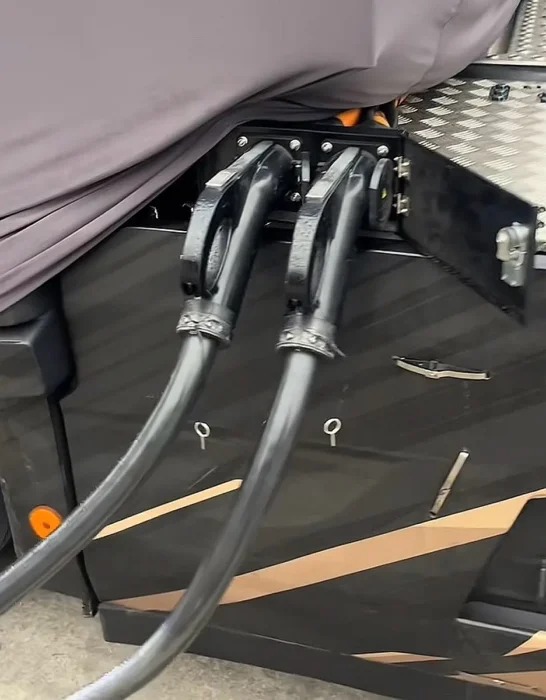
The truck has two charging sockets on its side, and the photos show both connected at the same time. A twin inlet would allow charging from two chargers at once, which can roughly double the recovery speed, if the chargers and infrastructure are compatible. Dual charging ports are common on Chinese electric trucks. Scania’s European electric trucks use a single Megawatt Charging System (MCS) port, which has been available to order since May 2026.
The prototype was photographed against the background of Scania’s expansion in China. Scania opened its plant in Rugao, Jiangsu, in October 2025, after an investment of about 2 billion euros, with capacity of up to 50,000 vehicles a year. It is Traton’s first wholly owned plant in China and serves China and other Asian markets.
Scania CEO Christian Levin said in October 2026 that the company will start building battery-electric trucks at Rugao as soon as it receives a licence, and that the company had to speed up its plans. He expects electric trucks to make up half of the Chinese market by the start of 2027.
In September 2026 Scania also announced “Venture & New Business China,” a unit for developing and testing new technology with local partners, with a focus on electrification and autonomous driving.