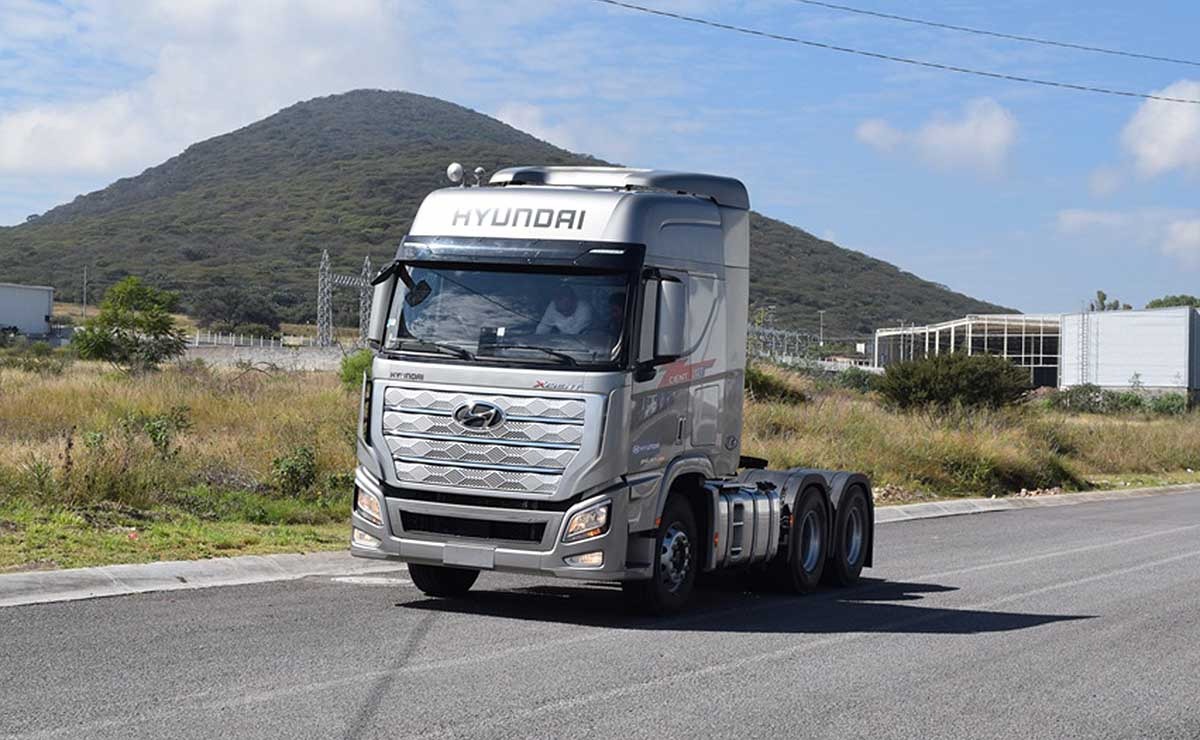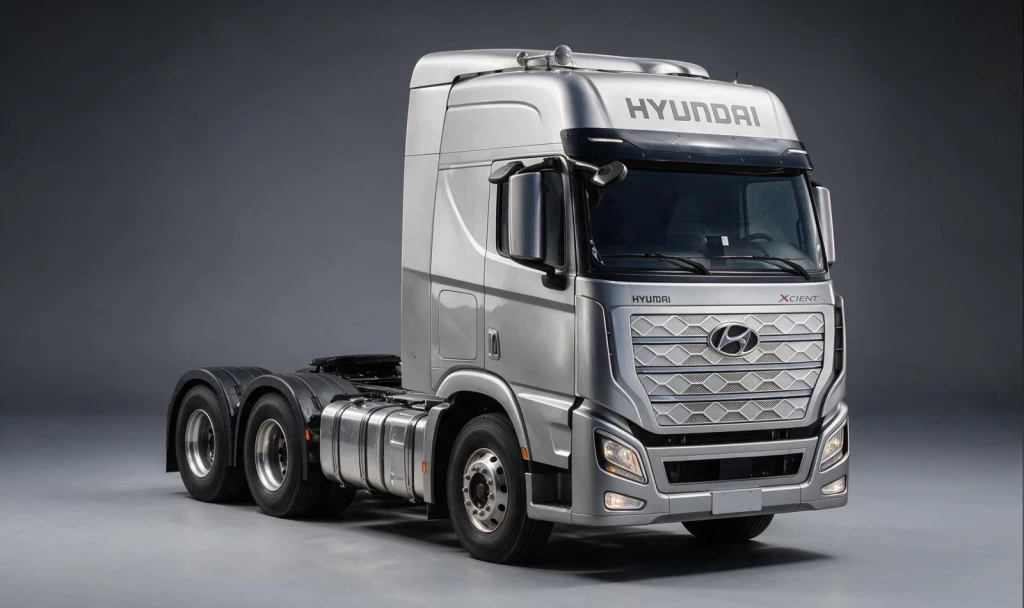
Hyundai Camiones y Buses México has presented the 2027 model-year XCIENT Euro VI, a 6×4 diesel tractor adapted to Mexican operating conditions. The truck is built on the Korean XCIENT, which Hyundai has been assembling in Querétaro since early 2025. The company says it was tested on Mexican roads, and that engineering changes were made in Korea afterwards.
Hyundai describes the truck as “tropicalised” for Mexican highways. Test trucks ran on the Puebla–Veracruz route, with long climbs at altitudes of around 3,100 m (10,170 ft) and descents of up to 1,300 m (4,265 ft), to evaluate the engine, transmission and brakes. Based on the results, the engine, transmission, suspension and braking systems were adjusted in Korea. Hyundai says the driver-assistance sensors are meant to reduce stress on the main mechanical components during long descents.
The XCIENT is built in South Korea and receives its final assembly at Hyundai’s plant in Querétaro, using local labour. The company handles the Mexican production under a DKD scheme, with the main assembly done in Korea and the final assembly in Mexico. Quality checks cover the transmission, engine and brakes, and each truck runs on a test circuit.
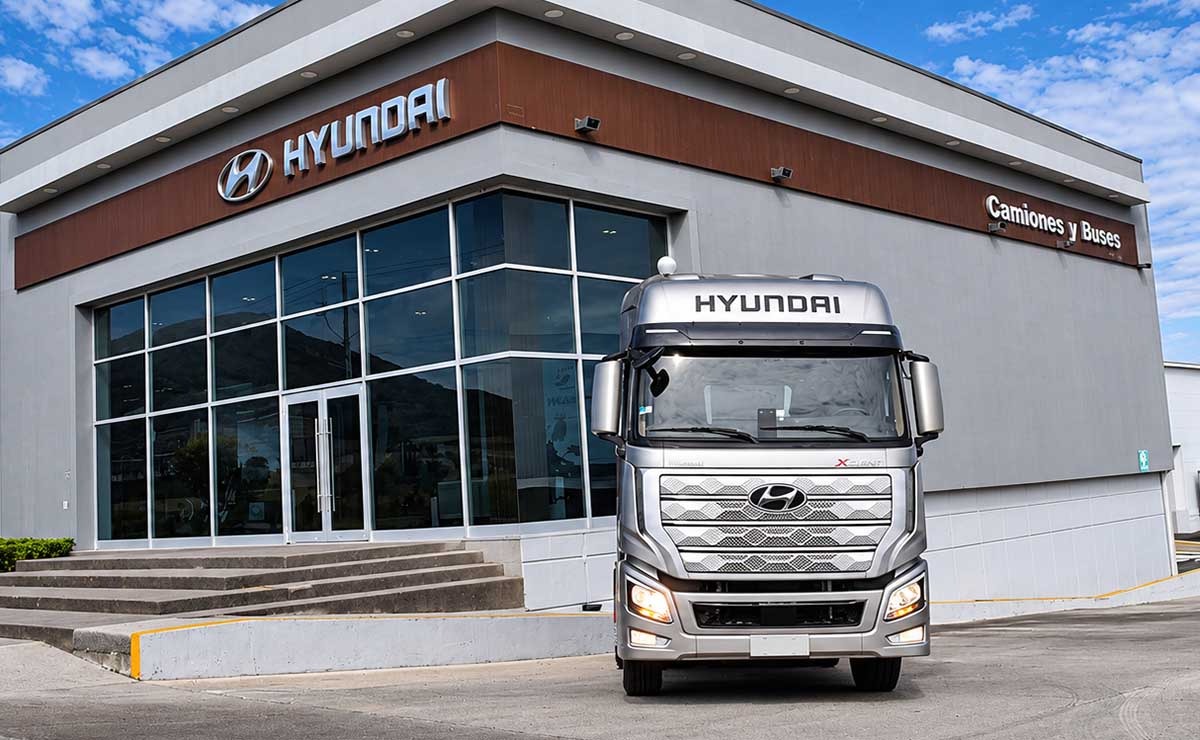
The tractor uses a Hyundai D6CF54E6 engine, a 12.7-litre (778 cu in) inline-six diesel with variable-geometry turbocharging and direct electronic injection. It meets Euro VI and is rated at 540 hp (403 kW) at 1,800 rpm. Torque is reported as 2,480 Nm (1,829 lb-ft), available between 1,100 and 1,400 rpm. The cooling fan is electronically controlled as standard.
Three transmissions are offered: a Dymos T230S12 manual, a ZF 16S2530TO manual and a ZF 12TX2620TD automated gearbox. The tractor has air-actuated disc brakes on both axles, self-adjusting and with wear indicators. The brake discs are 345 mm (13.6 in) in diameter, and the electronic systems include VDC stability control, ABS, traction control and an exhaust brake. The suspension is air-sprung with four bellows.
The 6×4 version has a gross vehicle weight of 35,100 kg (77,382 lb) and a tare weight of 9,150 kg (20,172 lb). Its maximum combination weight is 70,000 kg (154,324 lb), which suits long-haul logistics above 50 tonnes. Fuel tanks hold 790 to 1,090 litres (209 to 288 US gal), depending on the configuration.
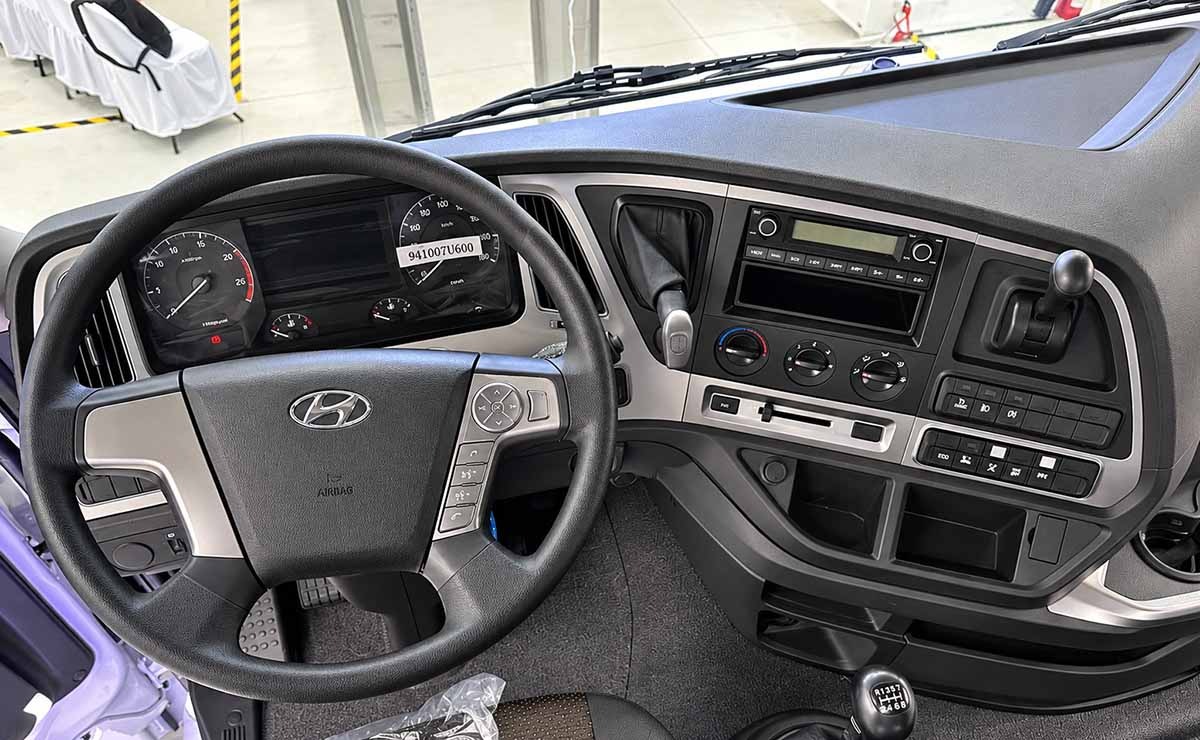
The cab is a structural unit with a high-strength steel roll-over cage and a high roof with an aerodynamic deflector as standard. A low roof or a vented roof are offered as options. The cab is air-suspended, and the driver’s seat has air suspension and adjustment. Driver aids include forward collision warning, lane departure warning, a driver airbag, pretensioned seat belts with a reminder, hill-start assist and a collapsible steering column.
Sales across the Mexican dealer network are reportedly due to begin in May 2027. Hyundai Camiones y Buses México says its plan for 2027 is conservative, aimed at small fleets and large industrial customers, and reportedly foresees 100 trucks in 2027 and 400 a year by 2030. Jonathan Hernández Castro, the company’s managing director, said the tests were very thorough.
The XCIENT was first launched in Mexico in January 2025, as a 540 hp Euro VI tractor with ZF transmissions, and the 2027 model year continues that line. Hyundai also plans to bring the hydrogen fuel-cell XCIENT to Mexico at a later stage.